
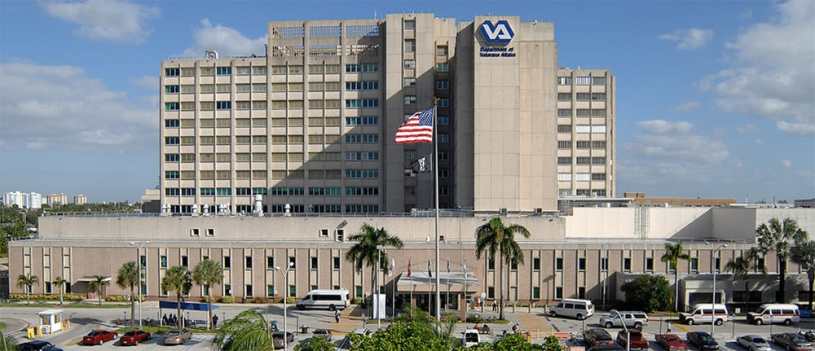
As a volunteer Chaplain at the VA, this author shares some somber memories from the past decades. Sharing with us what life is like in the fast lane?
This past week was one of the longest for me as a volunteer and on-call Chaplain at our local hospital. At times, facing some tough experiences. However, I have found that I see someone every single day with more problems than I have personally experienced over the decades with my cancer, heart issues, severe memory problems, and other health scenarios after service in the Vietnam War.
They somehow seem simple in nature when I see those experienced by people in the hospital, our military and our country.
This week, for example, I was asked to come to a small waiting room where I found an elderly woman and her daughter. Both had learned the wife’s husband would not live much longer and nothing could be done. I tried to find the proper words and prayers to use as I consoled both of them in their sadness and despair.
Later in that same small waiting room, I found myself sitting with the daughter of a very senior citizen who was seriously ill and due to his condition could not survive without constant oxygen support. A senior citizen who had lost his spouse the previous month. As his daughter told me this story, she began to cry, and I attempted to comfort her by stating that we had excellent medical support in our hospital and her father would be well cared for during his hospitalization. Then she gave me the rest of the story that was causing the many, many tears.
Her Father, now after the loss of his loving wife, no longer wished to live and had asked that this oxygen support be terminated, thereby allowing him to join his wife in heaven. Family was arriving from around the country to discuss his request. I will not report the decision, as it was a very private and emotional.
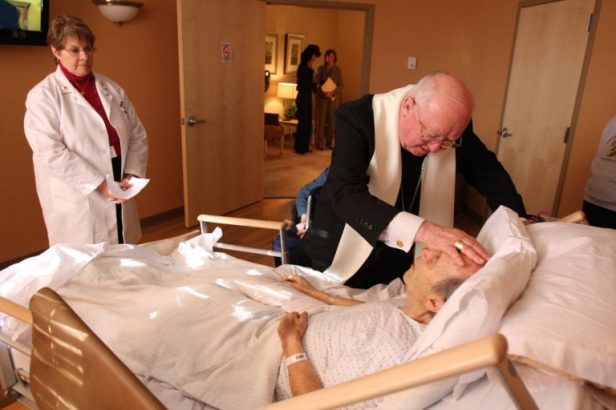
I have seen far too much sadness and suffering like this in my life. Far too much. Some days it seems overwhelming. While serving in the Vietnam War, I was hospitalized with a severe heat stroke and saw our heroes being treated for a multitude of horrific injuries. I heard cries for their mothers, for God, for someone to help them. Later, while hospitalized at Walter Reed Hospital, I saw men returning from combat missing arms and legs and eyes and hands and faces. I saw many with severe PTSD who did not want to live any longer after their experiences in the war. My own mental health at times reaching that level, sometimes well beyond my multiple health problems at that time.
I’ve observed sadness elsewhere. While on many deployments during years of overseas military assignments, I’ve seen small children on the streets of Iran, Egypt, Saudi Arabia, and other countries around the world crying for food, crying from the cold, crying for help. After military retirement and becoming an Associate Pastor, I’ve held in my arms hospice patients as they breathed their last. Sometimes too late for family members to respond in time from their homes far away.
Over the years, I’ve read thousands and thousands of stories about America’s military in combat performing heroic actions that are nearly unbelievable. Offering sacrifice for America. For example, let me tell you about one of them. Staff Sergeant Jon Cavaiani. He was born in Murphys, County Offaly, Ireland, and went to England a short time afterwards. He left England for the United States in 1947, and in 1953 moved to the small farming community of Ballico, California to be with his stepfather, Ugo Cavaiani.
In 1961, Ugo formally adopted Jon, and in 1968, he became a naturalized citizen of the United States. In 1969, Cavaiani joined the US Army. In 1970, he was deployed to Vietnam, where Sgt. Cavaiani provided security for an isolated radio relay site in enemy-held territory. On the morning of June 4th, 1971, the entire camp came under an intense barrage of enemy fire from a superior-sized enemy force. With complete disregard for his personal safety, he repeatedly exposed himself to heavy enemy fire in order to move about the camp’s perimeter, directing the platoon’s fire. He rallied the platoon in a desperate fight for survival, while returning heavy suppressive fire upon the assaulting enemy force with a variety of weapons. The entire platoon was to be evacuated, and he volunteered to remain on the ground and directed three helicopters into the landing zone for his men, but due to an intense increase in enemy fire, he was forced to remain at the camp overnight, where he calmly directed the remaining platoon members in strengthening their defenses. The following morning, the superior-sized enemy force launched a major ground attack in an attempt to completely annihilate the remaining small force. Staff Sergeant Cavaiani returned fire on the assaulting enemy force but was unable to slow them down. He then ordered the remaining platoon members to attempt to escape while he provided them with cover fire. With complete disregard for his safety, he recovered a machine gun, stood up, completely exposing himself to the heavy enemy fire directed at him, and began firing the machine gun in a sweeping motion along the two ranks of advancing enemy soldiers while the majority of the remaining platoon members were able to escape. While inflicting severe losses on the advancing enemy force, Cavaiani was wounded three times. At dawn, the firebase was gone, and he was the last defender. Out of ammunition. Nearly out of blood. Still standing. And the enemy troops captured him.
He was forced to march for forty-two days to his first prison camp, where he was introduced to what he referred to as the “rude, crude, and socially unacceptable” interrogation techniques of the North Vietnamese. After being introduced to his interrogator by way of a punch in the face, Cavaiani made the mistake of responding, “Hell, my grandmother hits harder than that.” When asked what he and his men were doing at their location, he gave his name, rank, and serial number only to watch several of the Montagnard prisoner troops executed right in front of him. Cavaiani recalled: “I told the interrogator, go ahead and kill me and my men, as I wasn’t going to say anything that would put another person in harm’s way. They proceeded to break many of my ribs on the left side and…fractured three vertebrae.”
His wounds were crudely bandaged, but the bullet lodged in his back was not removed. As for the numerous fragments of shrapnel in his flesh, he was forced to sharpen a bamboo stick and remove them himself.
He spent 23 months in captivity while undergoing beatings, starvation, isolation and disease. Without certainty of survival, and those back home assumed he had died. In 1973, he was released. Thin, scarred, but alive. Returning to no parade. No media storm. No welcome home.
Just a quiet return. Like that found by others upon return, hoping for recognition for what they had been through. Thousands of others faced more sadness and humiliation by protestors and others from America for their sacrifice and heroism in the Vietnam War.
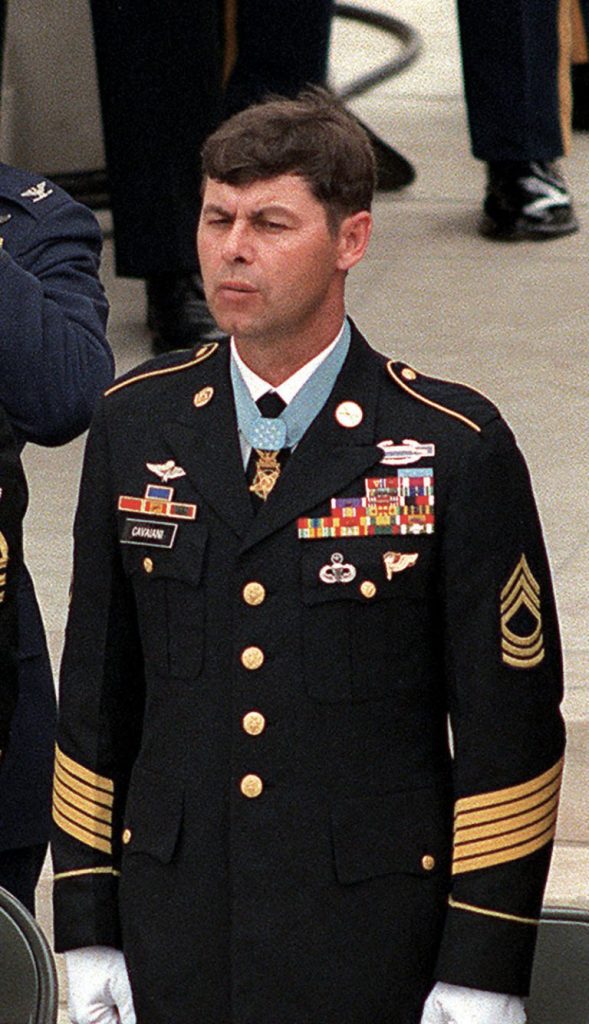
In 1974, Cavaiani was awarded the Medal of Honor for his heroic stand in the Vietnam War. He would go on to serve in Special Operations and attained the rank of Sergeant Major before retiring in the 1990s. Still, his Vietnam experience would always haunt him. “I don’t know that I’ve really sat down and faced Vietnam,” he told an interviewer in 1986. “It still bothers me.” An immigrant who came to America and offered his life for her. Sadly, Jon Cavaiani died of a bone marrow disorder on July 29, 2014, and was laid to rest in Arlington National Cemetery.
Having also served in Special Operations, I met many heroes like Sgt Major Cavaiani, who went beyond the call of duty. Offering their lives without thought of sacrifice, while at home, family members experienced unbelievable sacrifices of their own. Their stories are what help me remain strong in situations like that I experienced at the hospital with my daughter, dealing with her father’s request.
I was able to sit and comfort her until other family members began to arrive, without showing my own internal turmoil over the sadness being presented before me. I returned shortly thereafter to my office area in the hospital to comfort more family members and patients.
A few hours later, I returned home, and as I walked through the door, my wife saw my face, one that she had seen more than once upon entry from the hospital, and she said, “You don’t want to talk right now, do you?” And, I replied that I did not, as I went downstairs to sit in my office. Then I cried. Again.
But I think there are many others in our country who may come home with faces as similar as mine when I come home with my wife. Our police officers. I can only imagine what many of them go through on a daily basis. I see the stories on news programs about their treatment while they sacrifice for our communities. I see them on television shows as they wear body cameras while being attacked, cursed, or fired upon with weapons by bad people. I see them crying at the funerals of their partners. Every day I see this; every day I wish it would end.
So, the stories of heroes like those experienced by our police officers and by military personnel like Sgt Major Cavaiani will obviously continue. I also expect the suffering of family members and patients will continue as they come before me at the hospital.
Someone once told me it is simply life in the fast lane. I simply call it life giving back to life with the hope that if someday a member of my family needs comfort and support, it will be provided to their life. I hope that you will find in your heart the strength to help others on your road in life.
And, the fast lane will continue moving forward.
This article originally appeared in the authors’ digital magazine titled “Veterans Grapevine”. Here’s the link: https://www.veteransgrapevine.com/
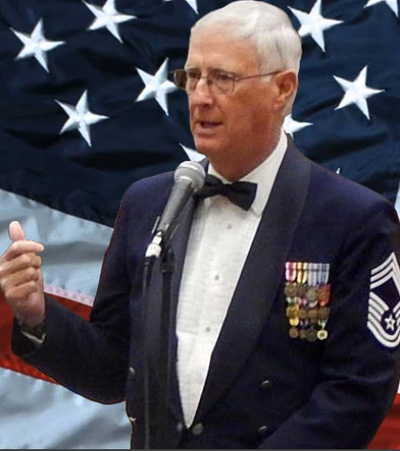
John Stewart is a retired Air Force Chief Master Sergeant, a disabled Vietnam War veteran and a veterans advocate for nearly three decades. In 2016 he was inducted into the Florida Veterans Hall of Fame for his volunteer service. Contact him at cornhusker69@yahoo.com.
*****
Thank you for taking the time to read this. Should you have a question or comment about this article, then scroll down to the comment section below to leave your response.
If you want to learn more about the Vietnam War and its Warriors, then subscribe to this blog and get notified by email or your feed reader every time a new story, picture, video and changes occur on this website – the button is located at the top right of this page.
I’ve also created a poll to help identify my website audience – before leaving, can you please click HERE and choose the one item that best describes you. Thank you in advance!


Sharing with us what life is like in the fast lane👌🏽✌🏿
LikeLike
Thank you, Chaplain for keeping the memory of these heroes alive! May God Bless!
LikeLike
I’ve often thought of what my feelings would be if I were a combat veteran during the Vietnam war as passed though west coast air terminals upon my return from Tatalina AFS in December 1969.
During my out-processing we were not allowed to leave the stateside base becasue of subversive activity by the SBA. Subversive activity no less in our own country. added with more silence or disrescpect to returning combat veterans.
Thanks for the opportunity to read this article.
LikeLike
Draftee here with service in Vietnam and during Desert Storm. I lost friends then and now later in their life.
Please know that your service and words are much appreciated. May God bless our armed forces and law enforcement officers along with all first responders.
LikeLike
Excellent
LikeLike
I enjoyed this article particularly the part about Jon Cavaiani. I noticed he died from a bone marrow issue. I wonder if it was due to exposure to Agent Orange? I was a combat RTO and Purple Heart Recipient in Vietnam in 1967. In 2023 I was diagnosed with Multiple Myeloma (cancer of the bone marrow) from exposure to Agent Orange in Vietnam. After 18-months of procedures and chemotherapy I had a bone marrow transplant January 2025. I am currently in remission and doing well. Best wishes to the family of Jon Cavaiani.
Lee Campbell
LikeLike
served with the First Air Cav in Vietnam, March 68 to July 69.
LikeLike
excellent. Very moving.
LikeLike
My heart goes out to you. Thank you for sharing your article. As a 2 tour Viet Nam vet, I’ve seen/heard a little of the same. Only difference is that I’ve held my feelings inside since 1967, I went cold, they will stay there forever because that’s the only way I can survive. My 2 tours were with Graves Registration, some of the names on the Wall, I helped get them home. So, if you understand, there’s only one set of footprints in the sand, that was when Jesus carried me thru. God Bless.
LikeLike
FYI. I am a Chaplain at a non-profit Hospital here, not the VA. Though, I do volunteer at a local Veterans Home.
Always enjoying your stuff.
John Stewart
LikeLike