
Slow-moving AC-130 Spectre Gunships are targeted and fired upon by SAMs – are they doomed? Read what this pilot did to evade them.
BY Henry Zeybel
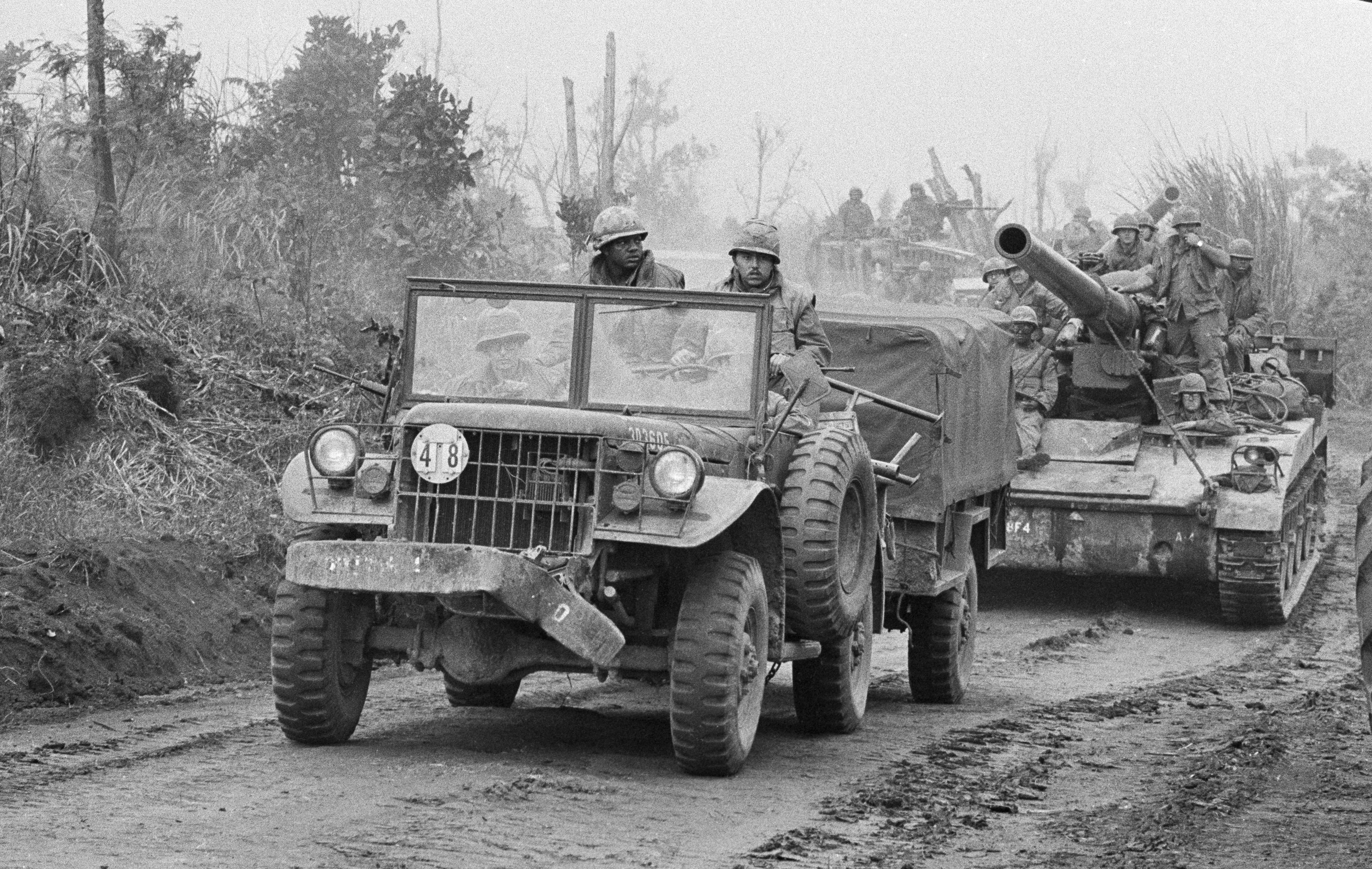
Along the Ho Chi Minh Trail in Southeast Laos in the middle of the night of March 2, 1971, the South Vietnamese Army’s Operation Lam Son 719 had blocked and backed up North Vietnamese trucks in bunches.
Overhead, in the booth in the belly of an AC-130 Spectre gunship, the four of us sensor operators felt as if we were at a circus shooting gallery and had won every Kewpie doll on the top shelf. Over the past couple of hours, we had destroyed or damaged 36 North Vietnamese trucks and now had found a convoy of 16 more.
Normally, I operated the low-light level television sensor, but that night I was giving on-the-job training to Maj. Ed Coogan. There wasn’t anywhere better to learn the trade: The dozen Spectre gunships flying out of Ubon Royal Thai Air Force Base were the only ones in the world.
About then, Our Lady of Loreto, Saint Therese of Lisieux, Saint Joseph of Cupertino, or whichever relic supposedly protected the living flesh of flyers snoozed off at the switch. Without a hint of warning, we suddenly swapped roles from shooters to targets when we heard Electronic Warfare Officer Maj. Jim Ballsmith say, “I have a SAM [Surface-to-Air Missile] activity light.”
Part of Ballsmith’s ingenious array of scopes and lights warned us that a missile launch site was tracking our slow-moving, high-wing, four-engine, prop-driven airplane.
Ballsmith gave Aircraft Commander Maj. Ed Holley directions that put the SAM site behind us. And nobody else said a word. For us, a SAM was death.
The SAM used in Southeast Asia was the Soviet-built SA-2 that, once it got humming, reached twice the speed of sound. A ground radar station guided the missile. The missile’s 300-pound warhead detonated upon impact or upon command of the guidance system’s operator.
After turning to the new heading, Holley said, “Are you positive it’s—”
“I have a SAM ready-to-launch light,” Ballsmith interrupted.
The SA-2 was to use against high-performance aircraft, typically fast movers. A lot of swift F-4 Phantoms had outmaneuvered it, but many lost the same challenge.
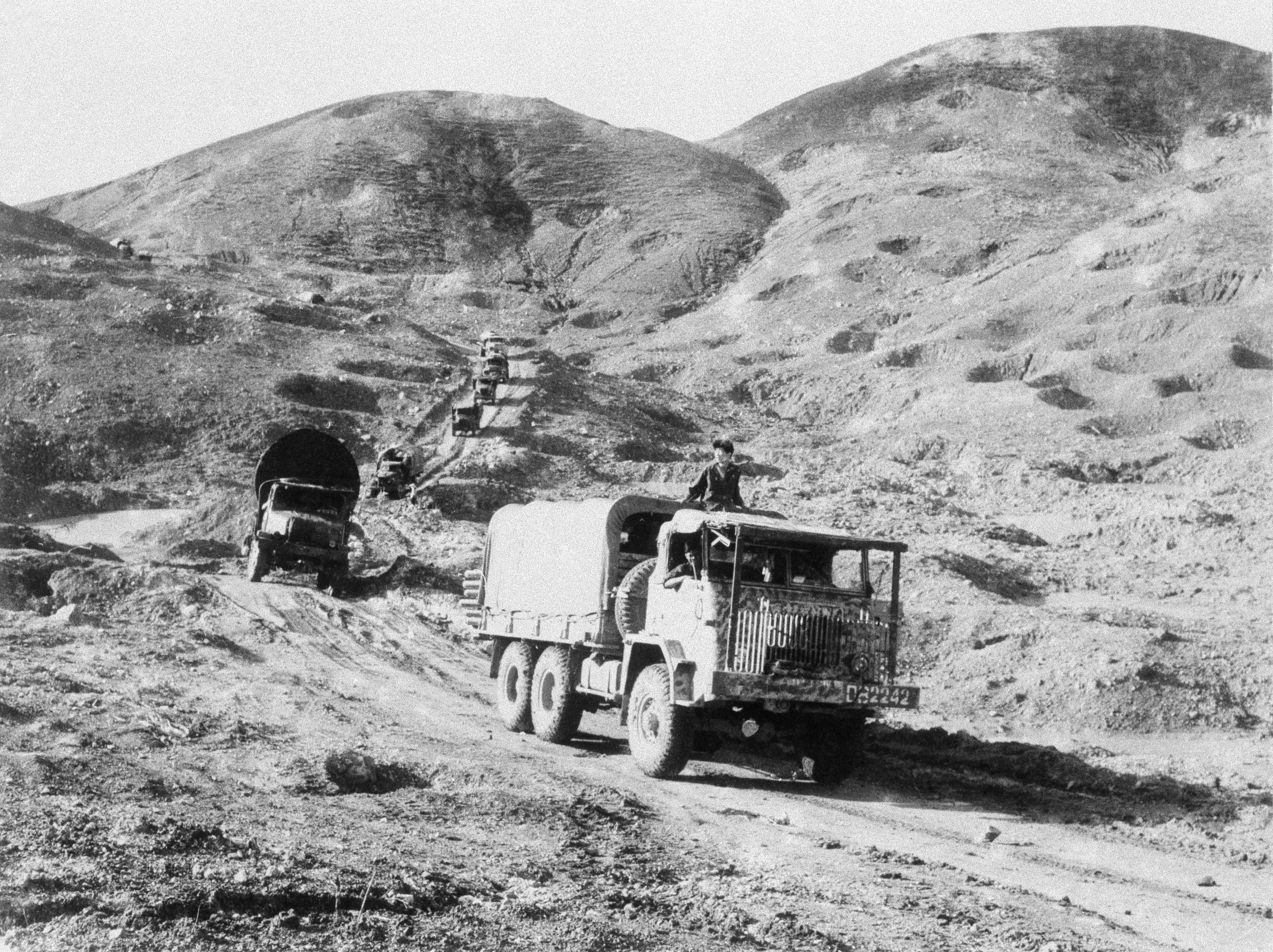
Although North Vietnam was stacked wall-to-wall with SAM sites, USAF Intelligence had determined that the SA-2 had “poor cross-country ability and would not be expected to be deployed in forward areas” such as Laos.
Unexpectedly, then, we were suddenly in the worst imaginable mismatch of the war.
“I have a SAM launch light,” Ballsmith said.
“Ohhhhh,” somebody moaned over interphone.
THE SIZE OF A TELEPHONE POLE
Acting like a pair of eyes in the back of Holley’s head, rear scanner Staff Sgt. Bob Savage surveyed the blackness of the night. Held by a steel safety cable, Savage stretched beyond the edge of the open aft cargo ramp, riding the gunship’s slipstream. A moment after Ballsmith called “SAM launch,” Savage later said, “I saw a flash, six o’clock. Six to eight, maybe ten miles. It’s a missile. It’s climbing.” He said that the SA-2 was the size of a telephone pole. “It’s coming right at the ramp,” he said.
“Hang on,” Holley said, “we’re going down.”
There have been great moments in sports when an athlete transcended the moment by calling his shot. Remember The Babe pointing to the stands before belting a World Series homer? Underdog Broadway Joe predicting Super Bowl victory and delivering it? Ali naming the round for a knockout?
But no one had ever called their shot when cheating death. Holley was about to try: He intended to snatch thirteen souls—plus his own—from the gates of hell, exactly as he once said he could.
One morning over breakfast at the O-Club, our crew was playing “What if…?” Speaking the unthinkable, I asked, “What do we do if they launch a SAM at us?” Without hesitation, Holley said, “I’ll dive and turn into it. It works for fighters. It’ll work for us.”
The rest of us stared at him. “I can do anything with a one-thirty that you can do with a jet,” Holley said, “only I do it lower and slower and tighter. I can escape from a SAM.” He had called his shot.
The maneuver was known as a “split-S.”
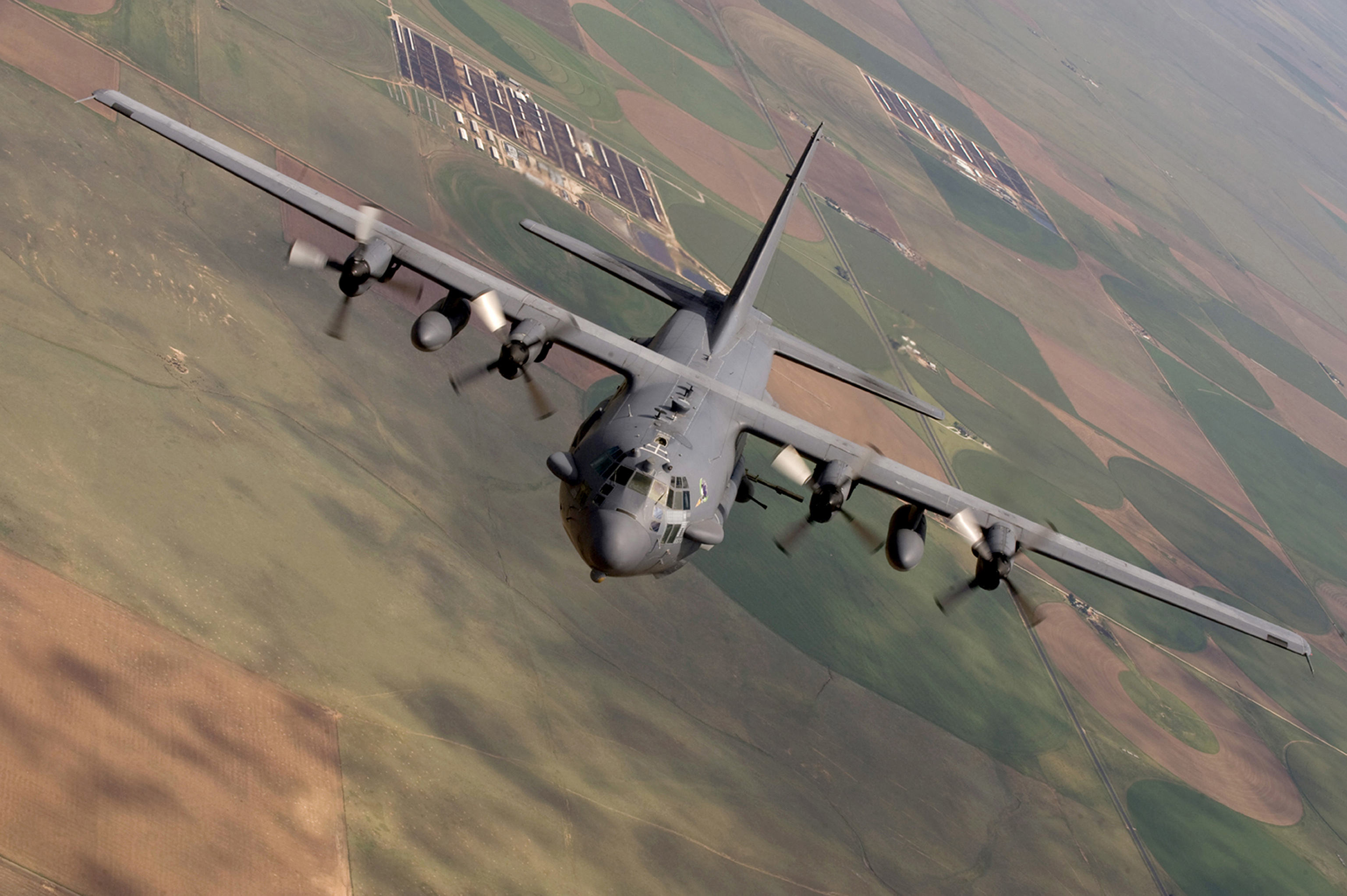
Now over Laos, from an altitude of 9,500 feet, Holley rolled the gunship beyond a 135-degree bank, practically upside down, and arced its nose earthward in a vertical dive. The maneuver was like turning over a dump truck and still steering it. Our aircraft plunged downward in open defiance of several aerodynamic laws.
In the booth, I hunched over and awaited an impact as we plummeted earthward. I looked up and saw that my three cohorts had assumed a similar position. The airplane did not have ejection seats.
I wondered how many men had sat in the same manner as us, expecting to be hit by a missile, and unable to do anything except wait it out. I couldn’t hope or pray; I just decided that too many guys had died that way.
On the flight deck, Navigator Maj. Dick Kauffman had an up-close view of the maneuver. “Everything tilted,” he later told me. “I saw the attitude gyro pass ninety degrees of bank. A second later we passed a hundred twenty degrees of bank and the gyro failed. When it failed, I looked at the radar altimeter, and it had no pulse. I assumed it was looking upward. When we pulled out of our dive, our heading was approximately 180 degrees difference from when we started the roll.”
Seconds passed like minutes for me. I felt as if Ballsmith had made his warning calls hours earlier. The altimeter seemed to unwind in slow motion; its numbers hardly registered in my mind. We hung suspended in an aerodynamic world of Holley’s creation.
Then, unexpectedly, the plane felt as if it was leveling, after a long silence, Holley asked, “Bob? Anybody? You see anything?”
“No, sir,” Bob Savage said. “I think it went over us.”
Somewhere that big, deadly son-of-a-bitch was still chugging along in the dark, I thought.
Holley started a climb back to altitude and said, “Nice work, Sergeant Savage. You too, Major Ballsmith. Great work.” A few seconds later, he asked, “What do you think, gang, want to finish off those trucks?” It was a rhetorical question.
Ed Coogan shook his head and said to me, “Should we be working around out here anymore tonight?”
I just shrugged and followed Holley’s lead.
TWO MORE SAMS
We leveled off at 9,500 feet. Kaufman gave Holley directions and Infrared Sensor Operator Cpt. Lee Schuiten locked on to a line of trucks. Holley rolled into a 30-degree left bank, intercepted the firing orbit, and opened up with a 40-mm cannon. Rounds exploded near the last truck in line.
Schuiten said, “You hit—”
“Good God,” Ballsmith interrupted, “I have another SAM activity light.”
Holley simply turned to Ballsmith’s new escape heading and—improbably or impossibly—we went through the exact sequence of events as the first attack all over again. Only this time Savage reported that two SAMs chased us.
Although events followed the same script, to me everything took place more rapidly, yet in finer detail. It was like sitting through a movie I’d seen before. Somehow, the action lacked a feeling of reality. I couldn’t believe we were doing it all again. I couldn’t believe that we had encountered—had stupidly walked into—the identical situation.
More than anything, I wanted it to end. The outcome didn’t matter. Yet I’d seen the movie before. My mind and central nervous system felt short-circuited.
We returned to Ubon at low level.
Back on the ground, we learned that another Spectre had survived a SAM attack: those crewmen didn’t realize they were targeted until a missile flew over top of them. As a result, all aircraft evacuated Laos on command, an order we failed to copy probably because we were busy with our own problems.
On the ground, Coogan asked me, “Is it always like this?”
“No,” I said, “sometimes it’s worse.”
Coogan didn’t laugh.
We owed Ed Holley our lives. I bought him breakfast.
VVA member Hank Zeybel is a retired U.S. Air Force Lieutenant Colonel who served two tours of duty in the Vietnam War. The first was as a navigator on USAF C-130 Hercules “Trash Haulers” during his 1968–69 tour, and the second as a navigator/bombardier on AC-130 Spectre Gunships during his second one in 1971–72, during which the amazing actions he describes in this article took place. A frequent contributor to the magazine’s Books in Review II section, his own books include a stirring 2021 autobiography, One Hell of a Ride.
This article originally appeared in the Vietnam Veterans of America quarterly magazine. Here’s the direct link: https://vvaveteran.org/46-2/46-2_shootertotarget.html
*****
Thank you for taking the time to read this. Should you have a question or comment about this article, then scroll down to the comment section below to leave your response.
If you want to learn more about the Vietnam War and its Warriors, then subscribe to this blog and get notified by email or your feed reader every time a new story, picture, video and changes occur on this website – the button is located at the top right of this page.
I’ve also created a poll to help identify my website audience – before leaving, can you please click HERE and choose the one item that best describes you. Thank you in advance!


I remember that C-130 engagement. I was flying F-4E’s out of Danang, AB, SVN. We were getting lit up flying gunship escort missions over Laos, but being more maneuverable and with ECM pods, had a whole lot more advantages than the C-130 Crews. Those guys had some huge brass ones to go through that!
LikeLike
The reason why this engagement actually happened was because of something which contributed to America’s eventual defeat in SE Asia. The consistent underestimation of our enemy. As stated in the article, the American higher ups had said it would be impossible for NVA forces to transport SA-2 SAMs great distances, and yet once again they were proven wrong. This is the same mentality the French had when they said the Viet Minh could never transport artillery all the way to Dien Bien Phu. And they paid the price for their naiveté’.
The following year, things got even more dangerous for AC-130s and helicopter gunships with the introduction of hand held SA-7s by the NVA.
LikeLike
Hello, in the Christmas 1972 ‘ bombing in Ha Noi, you had to face the Sam 3? Apparently Hanoi might had Soviet” assitanxe in this air battle? Thank you.
LikeLike
That is pretty freakin amazing. I had no idea that a C-130 could do a splt S and actually evade a radar guided SAM. One very skilled pilot. God and luck must have had some influence on being missed all three times.
LikeLike