
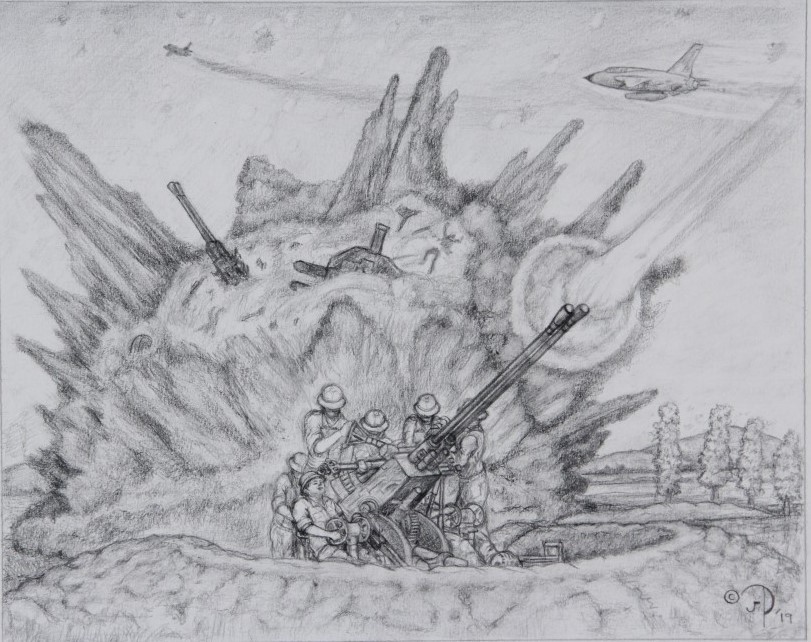
Chinese People’s Volunteers- Vietnam – Original artwork by author
by John F. Davies
This is a two-part article
The author provides a detailed report of China and the Soviet Union’s involvement in the Vietnam War. Much of what you’ll read was considered top secret for decades.
“Best turn it into a wider war…I’m afraid you really ought to send more troops to the South…Don’t be afraid of US Intervention, at most it’s no worse than having another Korean War…The Chinese army is prepared, and if America takes the risk of attacking North Vietnam, the Chinese army will march in at once. Our troops want a war now.” – Mao Zedong to the North Vietnamese, Beijing, 1964
America’s war in Vietnam has been the subject of countless books, articles, and documentaries. Yet 50 years after the war’s end, the roles of the two Communist superpowers, China and the Soviet Union, remain little known. With the end of the Cold War and the passage of time, much new and revealing information has come to light, revealing the breadth and depth of Sino-Soviet support. That commitment often put Chinese and Soviet troops in direct combat against the Americans, something which both sides kept a closely guarded secret during the war and years and afterward. It is only now that the real story can be told.
Beginning in the 1930s, Vietnamese Communist leader Ho Chi Minh maintained contacts with the Chinese Communists and their leader Mao Zedong. With the start of Ho’s war against French Colonial forces in 1946, the ties became even closer. After taking power in 1949, the newly established People’s Republic of China (PRC) worked at establishing diplomatic relations with its Vietnamese counterparts. This culminated with China recognizing the Democratic Republic of Vietnam ( DRV), on 18 January, 1950.
Political and military assistance soon followed, with arms and teams of People’s Liberation Army (PLA) advisors integrating themselves into the ranks of the Viet Minh. It can be said that Chinese assistance was essential in contributing to France’s eventual defeat. The climactic battle of Dien Bien Phu, for example, involved extensive Chinese involvement, including China’s supplying all the artillery used during the siege.
With the signing of the Geneva Accords in 1954, hostilities in Indochina ended. However, the agreement left Vietnam divided, with the Communists under Ho Chi Minh in the North and a pro-Western government under Ngo Dinh Diem in the South. Economic aid from China to North Vietnam soon followed, greatly helping to rebuild the nation’s economy and infrastructure.
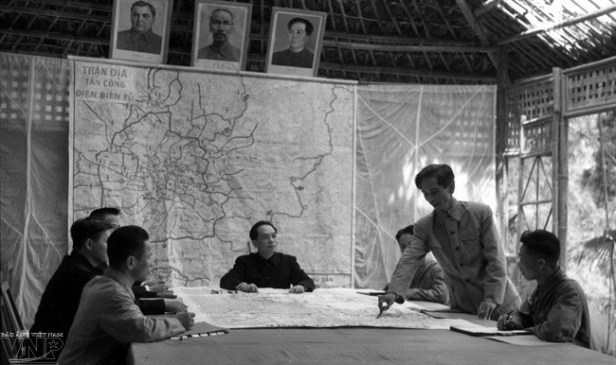
Viet Minh General Vo Nguyen Giap with his staff being briefed by Chinese PLA advisors during the Battle of Dien Bien Phu, ca 1954 ( VNP)
However, in January, 1959, the course of events changed. That year, the Vietnamese Communist Party plenum approved “Resolution 15”, calling for a more active role in supporting the Viet Cong in South Vietnam. Hanoi then prepared to fight Diem’s army and the United States, whose presence in the South was increasing. At the same time, relations between Moscow and Beijing were fraying to the breaking point. Concerned that the developing Sino/Soviet split could weaken the reunification effort, Ho Chi Minh appealed to both sides for unity. While his efforts preserved support from both nations, they nevertheless failed to prevent the growing schism between the two Communist superpowers. In 1961, the new Kennedy administration increased US involvement in Southeast Asia. China responded by increasing aid to the Viet Cong, contributing to greater gains in the field. With the deaths of Diem and Kennedy, the new American President Lyndon Johnson pursued a more aggressive policy towards Vietnam. He greatly escalated America’s involvement in the war and made preparations to directly commit US forces there.
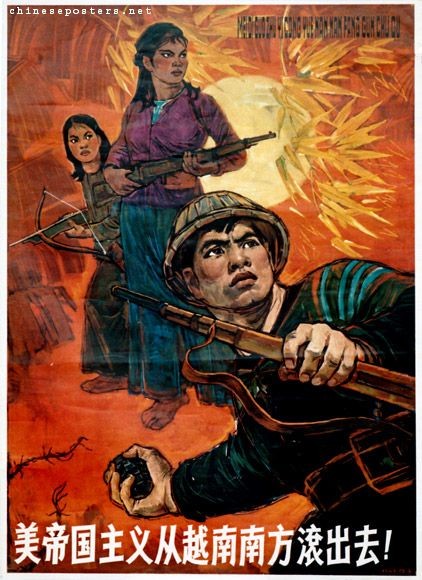
Chinese Propaganda Poster in support of the Viet Cong, 1963 (Pinterest/ chineseposters.net)
Then, in July of 1964, a “Most Important Meeting” was held in Hanoi. It was here that delegations from China, Laos, and Vietnam agreed to resist the Americans militarily. A month later, on 2 August, North Vietnamese PT boats attacked the American destroyer USS Maddox in the Tonkin Gulf. In response, President Johnson ordered airstrikes on North Vietnam. Soon afterward, the Gulf of Tonkin resolution was passed by Congress, giving Johnson unprecedented authority to escalate the war in Indochina.
China’s condemnation was swift and severe, and within 24 hours, MiG-17 fighters arrived in North Vietnam to form the nucleus of the DRV’s new Air Force. Shipments of Anti Aircraft artillery ( AAA), also arrived from China. The Soviet Union (USSR), whose support for the DRV had been moderate, also condemned the attacks, but its protests were more muted. In a diplomatic note, Premier Nikita Khrushchev advised Johnson to “show composure and restraint”, but the President’s curt response, stating that America “will be prompt and firm in its positive reply to acts of aggression”, ended all hope of negotiation.
In February of 1965, the die was cast when President Johnson authorized airstrikes against North Vietnam under Operation Rolling Thunder. Then on 8 March, elements from the 3rd Marine Division landed at Da Nang, making America’s commitment irrevocable. In response, on 9 June, 1965, the first Chinese troops crossed the border and into North Vietnam. The flood of men and materiel continued until, by the end of the year, more than 160,000 PLA troops were deployed there. This was then the beginning of a many-year-long commitment that cost China dearly in men and material.
The attitude of the Soviets had changed as well. After Khrushchev was deposed in October 1964, a new regime under Leonid Brezhnev came to power in the Kremlin. Moscow soon began mending fences with Hanoi. The new Soviet ambassador, Ilia S. Scherbakov, had already established close contacts with the DRV leadership. Then on 6 February, 1965, Premier Alexei Kosygin paid a state visit to Hanoi, where he received a tumultuous welcome. During the visit, American aircraft struck North Vietnam in retaliation for a Viet Cong attack on the US base at Pleiku. This caused the Soviets to take a more militant stance, and by spring, large quantities of arms, including SA-2 surface-to-air missiles ( SAMs), were shipped into North Vietnam. Where it was once a bystander, the USSR was now an active belligerent.
In the meantime, Mao had increased Chinese participation in the war, and by 1967, a total of 181,000 PLA troops had been deployed to Vietnam. This huge force consisted of 21 AAA regiments, as well as railroad, highway, and combat engineering units. They were organized into an extensive command structure under the leadership of General Luo Ruiqing.
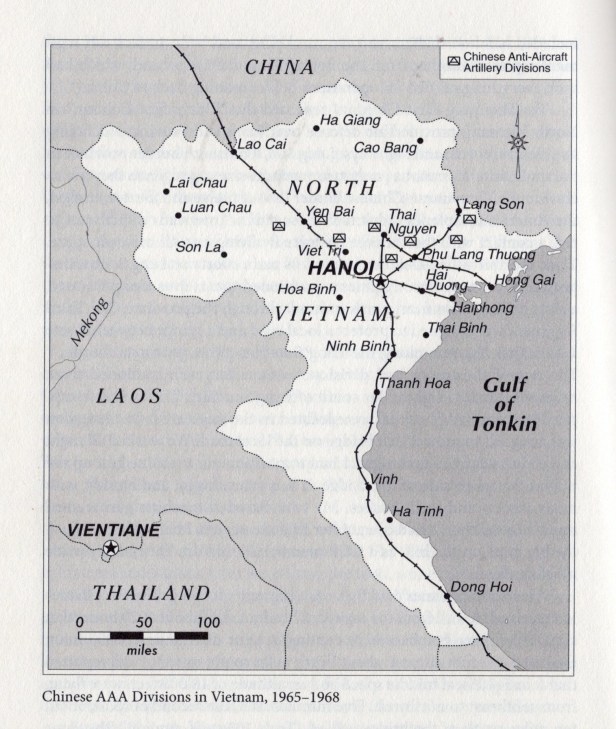
Deployment of Chinese AAA assets in North Vietnam (Xiaobing Li )
The AAA regiments were deployed North of Hanoi, covering the border region, the strategic rail junction at Yen Bai, and the Thai Nguyen steelworks, making up about 35 percent of total anti-aircraft assets. All units served six-month tours to give anti-aircraft troops the needed combat experience. Their armament consisted of 100mm, 76mm, 57mm, and 37mm artillery pieces, which were Korean War-vintage and therefore outmoded. In spite of this, PLA troops used innovative methods of deception and camouflage to lure US aircraft into range. However, as the air offensive continued, Chinese AAA became somewhat less effective. This was due to the increased number of US airstrikes and the influence of Mao’s Cultural Revolution, which emphasized political instruction over technical matters. In spite of this, PLA anti-aircraft troops made the best with what they had, accounting for 1,707 US Aircraft shot down.
Chinese engineering troops also contributed by repairing North Vietnam’s railroads, building new highway networks, setting up coastal defenses, and performing emergency repairs to bomb damage. Altogether, seven engineering divisions were deployed, their efforts vital in keeping North Vietnam’s infrastructure functioning during the American aerial offensive.
Unlike the Korean War, the Chinese military presence in North Vietnam was low-key and covert. PLA troops selected for deployment were transported to the border region, where they received orientation on the country itself and the current tactical situation. Interestingly, all Chinese personnel were required to change into North Vietnamese army (NVA) uniforms as a cover for their mission. Once in Vietnam, the Chinese received a genuinely warm welcome; however, they also experienced considerable hardship. Besides the dangers of combat, the oppressive heat, monsoon rains, and swarms of insects were a constant plague for the Chinese soldiers. Illness was also epidemic, and at any time, at least 30 percent of PLA formations were afflicted, in some cases approaching 60 percent.
Along with troops, China provided North Vietnam with vast quantities of economic and material aid. During the war, the PRC sent 214 million small arms, 1.2 million rounds of ammunition, 70,000 artillery pieces, and 18.1 million artillery shells. Assistance also included trucks, naval vessels, armored vehicles, aircraft, medical supplies and equipment, and 11.2 million sets of uniforms. All totaled, at the equivalent of $20 billion US Dollars.
However, this commitment was not without cost. By the end of China’s involvement, the PLA suffered a total of 8,115 casualties, with 1,715 killed in action. Sadly, their bodies were not transported home but instead buried in Vietnamese cemeteries. Something which, until recent times, greatly distressed the families of the fallen.
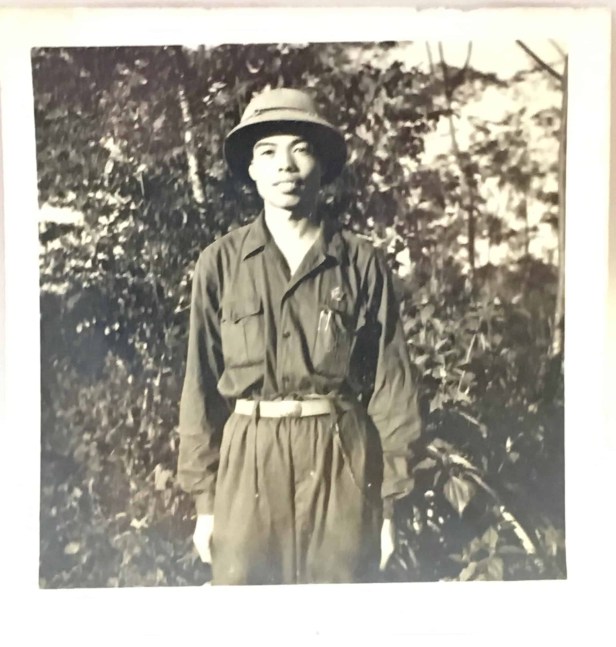
Chinese PLA Soldier in North Vietnam, wearing an NVA uniform with a Mao button above the left breast pocket. (Enemy Militaria)
Soviet involvement was also increasing.
End of Part I
A bibliography is available and can be furnished upon request.
This author has contributed other articles to this website – if interested, use the magnifying glass at the top right of this page and type in his name for a drop-down menu.
Here’s the direct link to Part II: https://cherrieswriter.com/2026/06/06/the-dragon-and-bear-in-the-room-chinese-and-soviet-involvement-in-the-vietnam-war-part-ii/
*****
Thank you for taking the time to read this. Should you have a question or comment about this article, then scroll down to the comment section below to leave your response.
If you want to learn more about the Vietnam War and its Warriors, then subscribe to this blog and get notified by email or your feed reader every time a new story, picture, video and changes occur on this website – the button is located at the top right of this page.
I’ve also created a poll to help identify my website audience – before leaving, can you please click HERE and choose the one item that best describes you. Thank you in advance!


Numbers of weapons and rounds of ammo appear to be inverted, or off by an order of magnitude.
Plus, 70K artillery pieces? Can’t possibly be correct.
1707 US aircraft shot down over the northern part of N. Vietnam? Again, seems off by an order of magnitude, as these would have to be almost 100% fixed wing aircraft…Are those the inflated claims of AAA gun crews and/ or propagandists?
The claim of eight AAA regiments seems quite plausible–but were they limited to the northern portion of the country? Also plausible are the claims of huge numbers to maintain roads, rail, etc., which would explain N. Vietnam’s ability to sustain operations at home while putting their adult male manpower into their combat forces.
LikeLike
I had heard about the Chinese involvement while I was there but paid no attention. I don’t recall knowing anything about the Soviets. I always thought of LBJ as a POS; didn’t realize he pulled the trigger. I wonder who really did give that POS the directions that he took. Sorta like Biden and the autopen.
LikeLike
This is very informative. We found weapons and uniforms that were certainly sent to the Viet Cong by China but I’ve never read about any of the details. I do have a question though. The following statement seems out of whack to me: “the PRC sent 214 million small arms, 1.2 million rounds of ammunition…” Are these numbers correct?
LikeLike
Source. “The Dragon in the Jungle”, by Dr. Xiaobing Li. The first English language history of China in Vietnam,. The author was himself a PLA veteran and had access to Chinese archives.
LikeLike
Excellent and articulate. I saw all this happening in real time as I was there, and extended deployment twice as a volunteer. I even questioned {in my own mind} why we gave so much power to our President to use “rolling thunder”. All that being said, I believe we are now in the identical situation today with Iran. All Pre-planned by China & Russia. History will tell. This time we win, with perhaps a “delayed ending”. Iran will rise again, only next time Armegeddon and coming much quicker than you think. Israel will play a key part in the end. Biblical? No not piticularly, we see “this” playing out in real time again.
LikeLike
Thought you might be interested in this article I wrote for a local publication recently:
https://www.plymouthindependent.org/a-sons-quest-to-detail-dads-bravery/
Dave David D. Kindy 39 Sterling Blvd. Plymouth, MA 02360 http://www.davidkindy.com 508-863-2534 davidkindy1832@gmail.com
LikeLike