
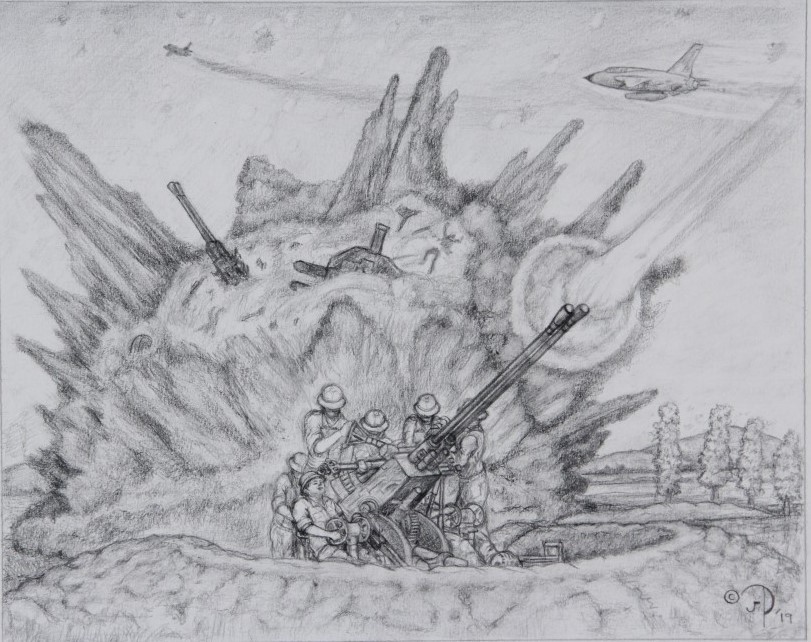
Chinese People’s Volunteers- Vietnam – Original artwork by author
It can indeed be said that North Vietnam could never have achieved its goal of reunifying the country without the assistance of the two Communist superpowers. Continue reading in part II to see how this all came to be.
by John F. Davies
Part II
In March of 1965, the first Soviet shipments of SA-2 SAMs arrived in North Vietnam. With them came teams of Soviet troops to instruct in the operation of the missiles. In order to gain breathing space to train the Vietnamese, the Soviet commanders, with Moscow’s approval, committed their missile troops to combat against the Americans.
On 24 July, 1965, Soviet manned SA-2 sites engaged US Aircraft for the first time. This came as a sudden shock to the Americans, with SAMs downing a sizable number of US aircraft, forcing them to radically change tactics.
While the missile troops were battling the air strikes, the Soviet advisors took to training the Vietnamese on the complexities of operating the SA-2. This was usually done in camouflaged, concealed sites, with translators assisting with instruction. A number of the Vietnamese were also sent to the Soviet Union for nine months of missile training. Upon their return, and with time and experience, the North Vietnamese SAM crews proved themselves to be adept at engaging with and shooting down American aircraft.
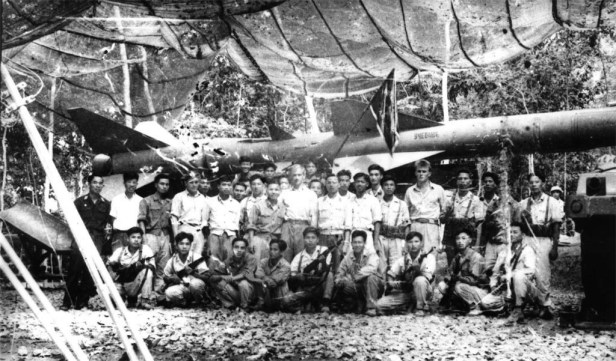
Soviet missile instructors with trainees at a hidden site in North Vietnam, 1965
Soviet aviation units were also heavily involved, including the introduction of the MiG-21 fighter to North Vietnam’s Air Force. This gave North Vietnamese airmen an equalizer against the more technologically advanced American aircraft. Many Vietnamese were also sent to the USSR for instruction in the MiG-21 and other technical systems. Radar and air defense centers were set up, and aircraft were dispersed and husbanded for the opportune moment to intercept US formations.
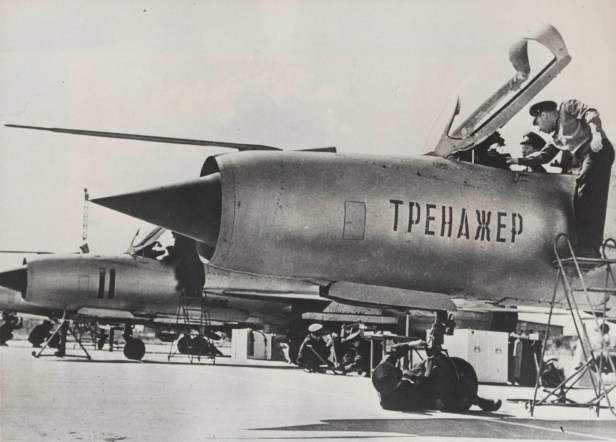
Vietnamese student pilots being instructed on the MiG-21 fighter in the Soviet Union, ca 1966
The Soviet aviation advisors came from front-line squadrons, acting as instructors and evaluators. A detachment of advisors was billeted at every active airfield, where they briefed Vietnamese airmen on flying techniques and new aircraft systems, and worked with them to perfect countermeasures against US tactics. They also assisted with repairing and troubleshooting maintenance issues. Along with countering manned aircraft, the Soviets helped the Vietnamese in dealing with American reconnaissance drones, which were making increasing overflights of North Vietnam. Unlike during the Korean War, there is at this point little hard evidence that Soviet pilots actually flew against US aircraft. However, based on the experience of Soviet missile troops being in combat, as well as anecdotal accounts from US Airmen, there exists the possibility (Most likely during the early part of the air war) that Soviet pilots may have flown in action against the Americans.
The third and least known element of Soviet assistance involved intelligence, both military and technical. Beginning in the mid-1950s, the Soviet KGB worked with the DRV on signals intelligence (SIGINT) operations against the South. Over time, a secure communications network was established, providing contact with forces throughout the DRV and in South Vietnam. Soviet military intelligence (GRU) was also involved, their teams gathering information on US tactics and equipment. The air campaign indeed supplied the Soviets with an intelligence bonanza. For example, the recovery of a complete escape capsule from an F-111 tactical fighter. GRU teams were involved in the interrogation of downed US airmen, as well as providing specialists to counter American electronic warfare (ECM) operations. Soviet intelligence trawlers and submarines also monitored US naval and air operations, providing early warning to the DRV of impending airstrikes.
Like China, the USSR made great efforts to keep its involvement covert. All Soviet personnel underwent a thorough vetting process before deployment and were given the cover of “Technical Specialist”.
Once in Vietnam, Soviet advisors were always accompanied by an interpreter. To avoid being mistaken for Americans, they carried an official document identifying them as members of the Soviet military. And like the Chinese, Soviet personnel also suffered from heat, rain, insects, and disease.
Material aid from the Soviets was also generous, including: 2000 tanks, 1700 Armored vehicles, 7000 Artillery pieces, 5000 Anti-aircraft guns, 158 Surface-to-air missile launchers, and 120 helicopters. Annual arms shipments totaled at $450 million in US Dollars. From the beginning to war’s end, a total of 11,000 Soviet troops served in North Vietnam, with the loss of 16 dead from combat or other causes.
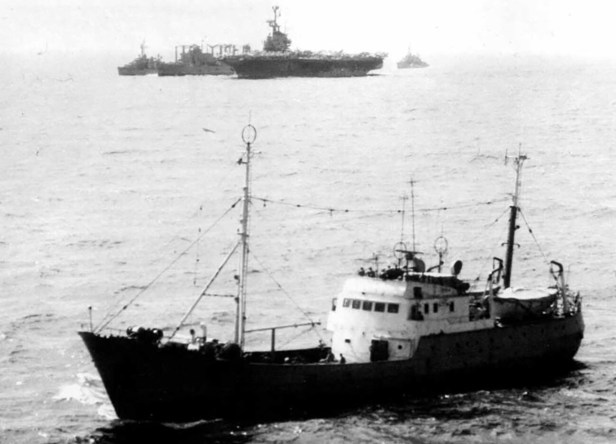
Soviet intelligence trawler shadowing the aircraft carrier USS Coral Sea in the Gulf of Tonkin ca 1969
From the very beginning of America’s direct involvement in Vietnam, consideration of Chinese and Soviet reaction was always on the minds of decision makers in Washington. President Johnson repeatedly expressed his fear of provoking China and the Soviets into a full-scale war. Proposals from Saigon and the Pentagon, which made military sense but could have expanded the war, were immediately shot down by Johnson for this reason. The US policy of gradualism, with its restrictive rules of engagement, was implemented to avoid being deliberately provocative, thereby giving the initiative to the Communist side. Declassified documents also show that the CIA had detailed knowledge of the vast Communist forces deployed in North Vietnam. However, the extent of Chinese and Soviet involvement was deliberately kept from the public, likely for fear of provoking a confrontation between potential superpowers.
The year 1968 marked a turning point in the war. The Communist Tet Offensive caused grievous losses to the NVA and Viet Cong Forces, but also turned US domestic opinion against the war and forced President Johnson to halt the bombing campaign above the 19th parallel. That year also saw the start of the first round of peace negotiations in Paris, which the Soviets had covertly supported while the Chinese had vehemently opposed.
Other forces also came into play. In China, the Cultural Revolution created a huge turmoil within the country, which filtered down and degraded the effectiveness of Chinese troops in Vietnam. After the death of Ho Chi Minh in 1969, tensions between China and the Soviets reached a point where a shooting war appeared imminent. As a result, in March, China withdrew its anti-aircraft troops from North Vietnam, while at the same time deploying some of its engineering units to Laos. The level of aid from Beijing also declined, and as a result, the Soviet presence increased, making the Soviet Union the DRV’s dominant arms supplier.
In Washington, the incoming Nixon administration made ending the Vietnam War its top priority. In the Fall of 1969, as a way to force an end to the fighting, President Richard Nixon engineered a near-confrontation with the Soviets under the code name Operation Duck Hook, which subsequently failed to accomplish its objective. However, with the thaw in relations with China in 1971, Nixon and National Security Advisor Henry Kissinger took the opportunity to pursue back-channel diplomacy to influence the peace talks in Paris. It was also during this period that Nixon began the withdrawal and drawdown of American forces in Southeast Asia. However, this did not stop the flow of Communist aid, in this case coming mostly from the USSR.
On 30 March, 1972, the North Vietnamese began what has been called the Easter Offensive, occupying huge swaths of South Vietnam. However, this invasion was met with a fierce response from South Vietnamese forces, backed by massive American air power. The aerial offensive against North Vietnam was also resumed, including the mining of Haiphong harbor. This greatly disrupted arms shipments from the USSR, which in response deployed five cruise missile submarines into the South China Sea. One in particular patrolled just outside Haiphong and was kept under close surveillance by a US Navy attack submarine. By fall, the offensive had been blunted, and there appeared to be progress at the Paris Peace talks.
When the North Vietnamese delegation walked out of the talks in December 1972, American B-52 bombers commenced an aerial assault on North Vietnam. This marked the final chapter of America’s war, where massive flights of bombers encountered hundreds of SAMs fired against them, so many that in time the NVA literally ran out of missiles.
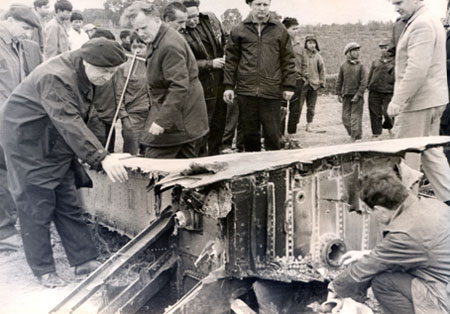
Soviet technical specialists inspecting wreckage from a downed B-52, 1972
With the signing of the Paris Peace Accords in January 1973, hostilities in Vietnam finally ended. However, for all intents and purposes, aid from China and the Soviets continued until the fall of Saigon in 1975. In time, however, China turned to supporting the Khmer Rouge in Cambodia and their leader, Pol Pot. After Mao’s death in 1976, the new regime in Beijing maintained the relationship between the two countries. Territorial disputes over maritime issues and offshore islands also occurred. This created much animosity between China and Vietnam, causing their later border war in 1979. The previous fraternal relationship of the two countries had soured in a short time to the point of alienation.
Moscow, on the other hand, gained much from its newly established relationship with Hanoi. Because the fighting between America and North Vietnam threatened to strain relations with the West, the Soviets played their diplomatic cards carefully. They pursued a dual-track policy, aiding the DRV while working behind the scenes toward a diplomatic solution. With the fall of Saigon, relations between the USSR and the newly reunited Vietnam became closer, with Soviet military forces later using Vietnam as a base for their own operations. However, the victory in Vietnam also emboldened the Soviets to become more overtly involved in other parts of the world. This included military assistance and/or direct operations in Africa, the Middle East, and eventually Afghanistan, ultimately causing the collapse of the Soviet Empire.
The presence of the two Communist Superpowers in Vietnam had a profound effect on the course of the war. They served as an unspoken deterrent to America’s escalation of the conflict and effectively countered all the West’s military moves. In particular, the over 100,000 Chinese troops in North Vietnam acted as a trip wire to prevent the US from invading North Vietnam proper. They also freed up additional North Vietnamese manpower for operations in South Vietnam. Despite their technical limitations, the PLA anti-aircraft troops contributed significantly to countering the US air offensive. The work of Chinese engineering troops was also essential in repairing bomb damage and keeping the DRV infrastructure functioning.
While newcomers, the Soviets quickly established themselves with the North Vietnamese, and over time developed a close relationship with them.
Their more advanced weaponry was another critical factor, giving North Vietnam state-of-the-art armament as a countermeasure to the weapons used by the Western forces.
However, the growing schism between the two Communist powers hindered cooperation and coordination of the two forces. Indeed, the Sino/ Soviet disdain threatened to damage the entire Communist war effort. And unlike in the Korean War, both China and the Soviets made a great effort to keep their involvement as covert as possible, likely to avoid an incident that could cause a confrontation with the West. Indeed, the existence of Chinese and Soviet forces in Indochina was well known to US Intelligence agencies, yet knowledge of this was never disclosed to the public and was one of the best-kept secrets of the Vietnam War, with both sides being complicit.
But it can indeed be said that North Vietnam could never have achieved its goal of reunifying the country without the assistance of the two Communist superpowers.
Like their American counterparts, both Chinese and Soviet Vietnam Veterans received no homecoming parade. Upon returning to their home countries, they were, under severe penalty, ordered never to speak of their experiences to anyone. And for many decades, thousands of Sino/ Soviet Vietnam veterans were forced to keep their own counsel. After the fall of the Soviet Union, information on its involvement in Vietnam slowly began to filter out, and in the last ten years, a clearer story of Chinese involvement has also come to light.
Today, the Vietnam veterans of China and Russia are finally being recognized for their sacrifices. In Russia, the Inter-regional Public Organization of Veterans of the Vietnam War actively maintains ties between Soviet veterans and their Vietnamese counterparts. And in December of 2024, Vietnam, for the first time, formally acknowledged the contributions of Chinese veterans by hosting a gathering of former PLA troops in Hanoi, where they met with fellow Vietnamese veterans and revived long-forgotten memories.
A fitting conclusion to a little-known yet important chapter in the history of the Vietnam War.
A bibliography is available and can be furnished upon request.
End of Part II
Here is the link to part I in case you missed it: https://cherrieswriter.com/2026/05/30/the-dragon-and-bear-in-the-room-chinese-and-soviet-involvement-in-the-vietnam-war-part-i/
This author has contributed other articles to this website – if interested, use the magnifying glass at the top right of this page and type in his name for a drop-down menu.
John F. Davies is a 1978 graduate of the University of California, Berkeley, with a bachelor’s degree in history. He also served for eight years in the United States Marine Corps during the Cold War, serving on both active and reserve duty in Infantry and Armor MOSs. A significant part of his career involved intelligence-related duties and work with Special Weapons. Following his retirement, he began conducting historical research into the Cold War era. He is especially interested in military events of the period that are not well-known. John believes that these historic moments have had an important impact on our present time and therefore need to be told. He has also studied classical drawing and painting and intends to add illustration to these moments in Cold War history, as many of them happened in secret and had no pictorial record.
At present, John is conducting research for a book covering the military’s response to the assassination of President John F. Kennedy. E-mail address: JFD3vet@protonmail.com
*****
Thank you for taking the time to read this. Should you have a question or comment about this article, then scroll down to the comment section below to leave your response.
If you want to learn more about the Vietnam War and its Warriors, then subscribe to this blog and get notified by email or your feed reader every time a new story, picture, video and changes occur on this website – the button is located at the top right of this page.
I’ve also created a poll to help identify my website audience – before leaving, can you please click HERE and choose the one item that best describes you. Thank you in advance!


