
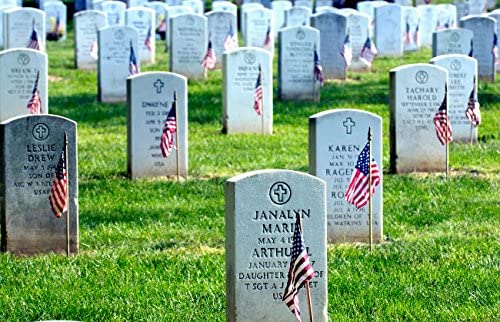
Here’s another breakdown of U.S. casualties sustained during the Vietnam War. I have also added links to other posts on this website, which contain additional information at the end of this article.
The following chart was found on the following website: National Archives and Records Administration / Defense Casualty Analysis System
| Casualty | Total | Army | Air Force | Space Force | Marines | Navy |
|---|
| Killed in Action | 40,934 | 27,047 | 1,080 | 0 | 11,501 | 1,306 |
| Died of Wounds | 5,299 | 3,610 | 51 | 0 | 1,486 | 152 |
| Missing in Action – Declared Dead | 1,085 | 261 | 589 | 0 | 98 | 137 |
| Captured – Declared Dead | 116 | 45 | 25 | 0 | 10 | 36 |
| TOTAL HOSTILE DEATHS | 47,434 | 30,963 | 1,745 | 0 | 13,095 | 1,631 |
| Missing – Presumed Dead | 123 | 118 | 0 | 0 | 3 | 2 |
| Other Deaths | 10,663 | 7,143 | 841 | 0 | 1,746 | 933 |
| TOTAL NON-HOSTILE DEATHS | 10,786 | 7,261 | 841 | 0 | 1,749 | 935 |
| TOTAL IN-THEATER DEATHS | 58,220 | 38,224 | 2,586 | 0 | 14,844 | 2,566 |
| Killed in Action – No Remains | 575 | 173 | 206 | 0 | 102 | 94 |
| Missing in Action – Declared Dead – No Remains | 691 | 201 | 339 | 0 | 74 | 77 |
| Captured – Declared Dead – No Remains | 52 | 32 | 7 | 0 | 3 | 10 |
| Non-hostile Missing – Presumed Dead – No Remains | 91 | 86 | 0 | 0 | 3 | 2 |
| Non-hostile Other Deaths – No Remains | 332 | 69 | 30 | 0 | 37 | 196 |
| TOTAL – NO REMAINS | 1,741 | 561 | 582 | 0 | 219 | 379 |
| WOUNDED – NOT MORTAL | 153,303 | 96,802 | 931 | 0 | 51,392 | 4,178 |
| NUMBER SERVING WORLDWIDE | 8,744,000 | 4,368,000 | 1,740,000 | 0 | 794,000 | 1,842,000 |
| NUMBER SERVING SOUTHEAST ASIA | 3,403,000 | 2,276,000 | 385,000 | 0 | 513,000 | 229,000 |
| NUMBER SERVING SOUTH VIETNAM | 2,594,000 | 1,736,000 | 293,000 | 0 | 391,000 | 174,000 |
The following information is from www.lzsalley.com (101st Airborne)
9,087,000 military personnel served on active duty during the Vietnam Era (28 February 1961 – 7 May 1975)
8,744,000 personnel were on active duty (worldwide) during the war (5 August 1964-28 March 1973)
3,403,100 (including 514,300 offshore) personnel served in the SE Asia Theater (Vietnam, Laos, Cambodia, flight crews based in Thailand, and sailors in adjacent South China Sea waters).
2,594,000 personnel served within the borders of South Vietnam ( I January 1965 – 28 March 1973)
Another 50,000 men served in Vietnam between 1960 and 1964
Of the 2.6 million, between 1 and 1.6 million (40-60%) either fought in combat, provided close combat support, or were at least fairly regularly exposed to enemy attack.
7,484 women served in Vietnam, of whom 6,250 or 83.5% were nurses.
The peak troop strength in Vietnam was 543,482 on 30 April 1969.
1,736,000 were US Army
391,000 were US Marines
293,000 were US Airmen
174,000 were US Sailors (this figure includes the US Coast Guard)
Casualties:
Hostile deaths: 47,359
Non-hostile deaths: 10,797
Total: 58,156 (including men formerly classified as MIA and Mayaguez casualties.
Highest state death rate: West Virginia–84.1. (The national average death rate for males in 1970 was 58.9 per 100,000).
WIA: 303,704 – 153,329 required hospitalization, 150,375 who did not.
Severely disabled: 75,000, 23,214 were classified 100% disabled. 5,283 lost limbs, 1,081 sustained multiple amputations.
Amputation or crippling wounds to the lower extremities were 300% higher than n WWII and 70% higher than in Korea. Multiple amputations occurred at the rate of 18.4% compared to 5.7% in WWII.
MIA: 2,338
POW: 766, of whom 114 died in captivity.
Draftees vs. volunteers:
25% (648,500) of the total forces in-country were draftees. (66% of U.S. armed forces members were drafted during WWII)
Draftees accounted for 30.4% (17,725) of combat deaths in Vietnam.
Reservists KIA: 5,977
National Guard: 6,140 served; 101 died.
Ethnic background:
88.4% of the men who actually served in Vietnam were Caucasian, 10.6% (275,000) were black, 1.0% belonged to other races.
86.3% of the men who died in Vietnam were Caucasian (including Hispanics)
12.5% (7,241) were black.
1.2% belonged to other races
170,000 Hispanics served in Vietnam, 3,070 (5.2%) of whom died there.
34% of blacks who enlisted volunteered for the combat arms.
Socioeconomic status:
76% of the men sent to Vietnam were from lower middle/working class backgrounds
75% had family incomes above the poverty level
23% had fathers with professional, managerial, or technical occupations.
79% of the men who served in ‘Nam had a high school education or better.
63% of Korean vets had completed high school upon separation from the service)
Winning & Losing:
82% of veterans who saw heavy combat strongly believe the war was lost because of a lack of political will.
Nearly 75% of the general public (in 1993) agreed with that.
Age & Honorable Service:
The average age of the G.I. in ‘Nam was 19 (26 for WWII)
97% of Vietnam-era vets were honorably discharged.
Pride in Service:
91% of veterans of actual combat and 90% of those who saw heavy combat are proud to have served their country.
66% of Viet vets say they would serve again, if called upon.
87% of the public now holds Viet vets in high esteem.
Helicopter crew deaths accounted for 10% of ALL Vietnam deaths. Helicopter losses during Lam Son 719 (a mere two months) accounted for 10% of all helicopter losses from 1961-1975.
Other posts on this website cite casualties by age, race, country, category, year, state, enlisted vs. officer, married vs. single, and civilian contractors.
#####
Thank you for taking the time to read this. If you have a question or comment about this article, scroll down to the comment section below to leave your response.
If you want to learn more about the Vietnam War and its Warriors, then subscribe to this blog and get notified by email or your feed reader every time a new story, picture, video, and change occur on this website – the button is located at the top right of this page.
I’ve also created a poll to help identify my website audience. Before leaving, please click HERE and choose the one item that best describes you. Thank you in advance!

 CherriesWriter - Vietnam War website
2,594,000 personnel served within the borders of South Vietnam ( I January 1965 – 28 March 1973 I was one of this number that volunteered. I was an OR Medic at 3rd. Field Hospital in Saigon, 1972 R
LikeLike
Thanks. The statistics are sobering. If anyone is interested in the subject of Vietnam POWs, I suggest you visit our website. http://www.vietnamwarpows.com
32 escaped, 630 were released. 662 of us got out of that mess alive. Names of the 662 are also at this official Department of Defense website; http://www.DPAA.mil
You can check the current status of the 324 of Vietnam POWs still alive, 18 Desert Storm POWs still alive, 8 Iraqi Freedom POWs still alive. Come visit our site.
Mike McGrath, POW 5 years, 8 months,
NAM-POWs Historian
LikeLike
Coast Guard Casulties?
LikeLiked by 1 person
Thanks for sending this. I use to get it, but for some reason I was dropped off and I can’t get back on for some reason.
LikeLiked by 1 person
Sign up for email updates.
LikeLike
I knew three men whose names are on The Wall:
My Cousin, the Marine
https://www.vvmf.org/Wall-of-Faces/23639/GARY-W-HOLBROOK/
My Pointman, “Wyoming”
https://www.vvmf.org/Wall-of-Faces/36186/EARL-E-MCCARTY/
My Platoon Sergeant
https://www.vvmf.org/Wall-of-Faces/4629/ROBERT-M-BOLES/
LikeLike
2,594,000 personnel served within the borders of South Vietnam ( I January 1965 – 28 March 1973
I was one of this number that volunteered. I was an OR Medic at 3rd. Field Hospital in Saigon, 1972
Randall Underwood
LikeLiked by 1 person
Good article and breakdown. I was medic with the 54th Dustoff in Chu Lai 69-70.
LikeLiked by 1 person
My brother was a crew chief/door gunner 1967-69 in the 17th AHC and the 195th AHC and was lucky to have survived. he also served in Desert Storm. Years later he told me the Vietnam War was a total waste- that we gained nothing and fought and died for the politicians who didn’t have a clue. You were only fighting to save the life of your fellow soldier and he was doing the same for you.
LikeLiked by 1 person
Wow! Thanks. I was 1 of those multi-limb amputees. I thought there would be more than thatSent from my iPhone
LikeLiked by 1 person