
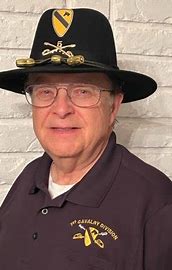
What goes through an infantry officer’s head during a firefight? Fear and indecision can get everyone killed, a soldier must overcome it and trust in his training. Here’s one platoon leader’s take on it.
By Robin Bartlett
John Wayne, who never served in the military but is revered by all branches of the service, may have said it best: Courage is being scared to death but saddling up anyway.
Courage under fire is something all grunts (infantrymen) thought about in Vietnam. My firefights, as a combat infantry platoon leader, came in a variety of forms: a skirmish with one or two enemy soldiers walking down a trail or a short but ferocious ambush initiated by our own soldiers or the enemy, often resulting in the immediate death of those ambushed. There were times when I was engaged in a firefight during a helicopter combat assault into a hot LZ. My worst firefights were those that occurred at night. This may have been an attack against our dug-in company’s NDP (night defensive perimeter) by an enemy using mortars and rocket-propelled grenades (RPGs). Night fights meant fear, chaos, and confusion because of the darkness and uncertainty of enemy movement. The enemy were masters of night fighting, and on at least one occasion, we defended our firebase against a North Vietnamese Army (NVA) force. In this battle, “Sappers” would try to penetrate the perimeter wire and throw satchel charges into command bunkers.
A firefight of any type was horrific, with men often wounded or killed. It was my worst nightmare. On patrol in the deep jungle, encountering an enemy force with bullets flying overhead, I found myself pressed to the ground and unable to see more than 5-10 meters in any direction. The experience could be paralyzing and traumatic. My first instinct was to give orders to attack the enemy, but equally important was securing my position and placing men in defensive positions to the front, flanks, and rear to guard against being overrun. The next challenge was calling our Forward Observer (FO) and requesting artillery support when unsure where I was on the ground. The FO had preplanned artillery concentrations marked on my map, but exactly how close I was to those concentrations was always a big question in my mind. I asked that the first shot be a smoke round and listened to where it landed, praying it was not on top of me. Then I gave adjustment instructions to the FO based on where I heard the round land, always adding extra distance to be safe.
When an ambush resulted in wounded soldiers, I knew my men wondered what my priorities would be. Would I give orders to continue an aggressive attack, or would I call for a medevac and make saving lives my top priority? These decisions were critical as my men also thought, “what if I was the next one to be wounded?”
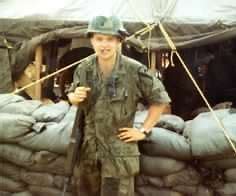
For me, tunnel vision, adrenalin pumping through my body, intense sweating, and the need to make fast decisions while facing the terror of the moment all happened at once. I prayed that the orders I gave would not put my men in harm’s way, get them killed, or further complicate an already perilous situation. Then, suddenly, my training kicked in, and I gave orders, directing my men to move and provide covering fire while my medic and I pulled a wounded man to safety. I called the FO and dropped rounds on the target with devastating explosions while screaming at my men to take cover and keep their heads down.
In the deep jungle, Cobra helicopter gunship support was of no help. They could not find or see us on the ground. Popping smoke would only get hung up in the canopy. So, I told my medic to start working on the wounded man while I called for a medevac, giving coordinates for the best estimate of where I was. For me, sometimes, contrary to how platoon leaders were taught, the first priority was always taking care of severely wounded men in danger of bleeding out.
We chopped down trees to open a hole in the canopy. When we heard the medevac circling the area, I spoke with the pilot on the radio and fired a star cluster, like a Roman Candle, through the hole in the canopy, praying the pilot or door gunners would spot us. We tied a smoke grenade to the end of a long pole, popped it, and held it high over the hole in hopes the chopper would spot the colored smoke and come in to hover.
The medevac came in fast and dropped a jungle penetrator (steel cable with a seat at the bottom). The wounded man would sit on the seat and be hauled up. If the man was too gravely wounded, the helicopter would drop a stretcher, and we tied the man into it. Again, the helicopter would swoop in, drop the hook, and haul the man to safety. “Only then could we breathe easier as it was a short flight to the battalion aid station and lifesaving attention.
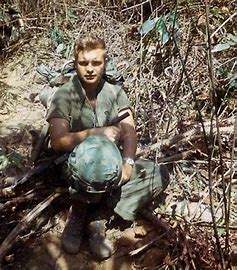
The dead were dead. They weren’t going anywhere. After the fight, everyone needed to recover from the adrenaline coursing through our bodies, leaving us drained and utterly exhausted. Eventually, I would wrap each of the dead in a poncho and attach a death card to his boot, along with one dog tag. I wrote the man’s name, rank, and serial number on the card and indicated the map coordinates where he had died. Sometimes, we had to carry the dead for miles before we could reach the open ground where a helicopter could land. The incoming helicopter brought water, ammunition, C-rations, and we loaded the dead onboard for their long trip home. This was the hardest job I had to do as a platoon leader: going through the man’s pockets, securing personal effects, wrapping him in a poncho, and tying cord around his body so it would not come loose in the rotor wash. But this was my job and mine alone.
What I learned about courage in a firefight was to use all the weapons at my disposal and to aggressively attack the enemy position with as much firepower as I could bring to bear. This included our own weapons: M16s, machine guns, and grenade launchers, and calling for added support from artillery and Cobra helicopter gunships. I tried not to take unnecessary risks with my men and gave them what I hoped were orders that were the best I could make. And I gave priority to getting my severely wounded soldiers medevaced from the battlefield as quickly as possible.
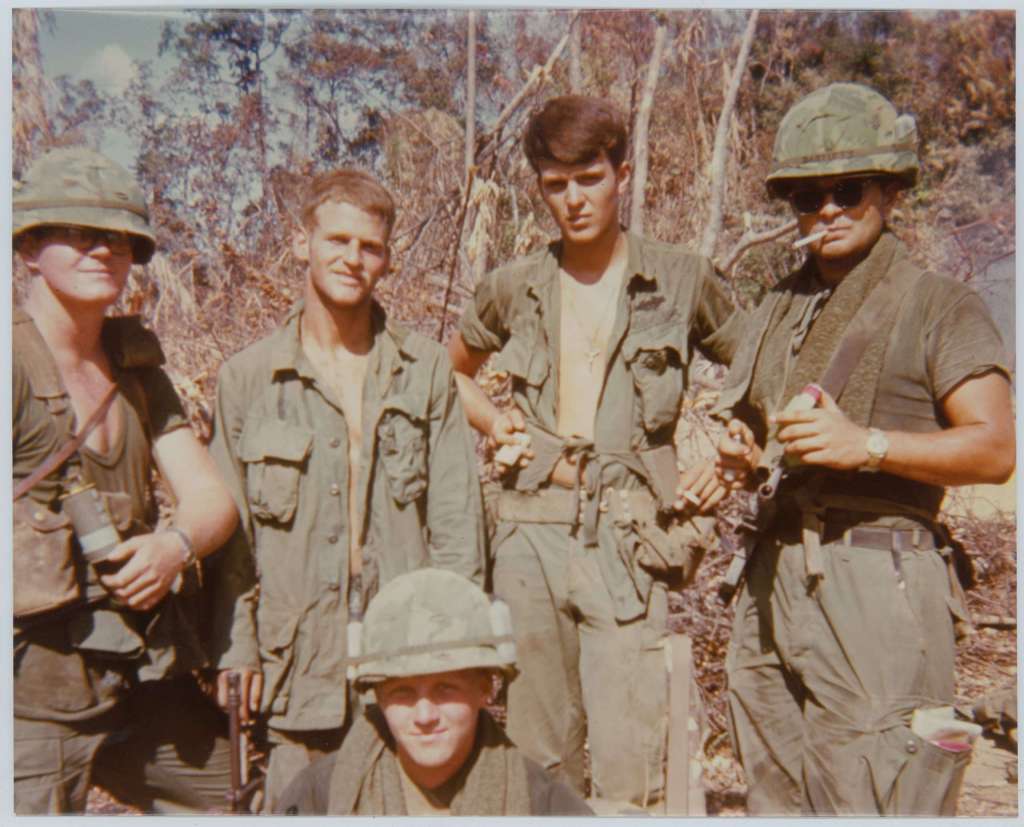
There was never a minute that I wasn’t afraid in a firefight, but I reached deep down inside, trusted my training, and found the grit to do what had to be done. Firefights were the worst experiences of my life, and some have stayed with me to this day. I look back on those moments and take comfort in the fact that I did not freeze; I directed my men to attack and kill the enemy without unreasonable risk; and I was usually successful in evacuating my severely wounded men.
In The Duke’s own words: I was scared to death but saddled up anyway!
This article appeared in DISPATCHES, the Summer 2024 Edition, from the MWSA website.
*****
Robin Bartlett has contributed several articles to this website. If you want to read more of his work, go to the top of this page, click on the magnifying glass in the top right corner, then type “Robin Bartlett” and hit enter. A drop-down menu will provide direct links to each article. To return, click on the back arrow at the top left of the page.
*****
Thank you for taking the time to read this. Should you have a question or comment about this article, then scroll down to the comment section below to leave your response.
If you want to learn more about the Vietnam War and its Warriors, then subscribe to this blog and get notified by email or your feed reader every time a new story, picture, video or changes occur on this website – the button is located at the top right of this page.
I’ve also created a poll to help identify my website audience – before leaving, can you please click HERE and choose the one item best describing you. Thank you in advance!

 CherriesWriter - Vietnam War website
I was an armored cab platoon leader and I can relate to his story I remember the first time I had to call a med. evac I was so nervous that every time I spoke in the radio instead of using my call sign A16 I kept on saying A 61. 61 became my nickname
LikeLike
Great description of being a young officer in combat. As career professional Soldier and infantry officer who trained for 4 years and prepared to be an infantry platoon leader and company commander in Vietnam, by the time I graduated from West Point, there were only advisers sent there. So I went to Germany to face the expected hordes of Soviet invaders that never came across that border. Everything LT Bartlett described was what I envisioned in my mind. 21 years later as I landed with the first Marines in Mogadishu with my small joint detachment, all of those years of training and mental preparation kicked in. I can honestly say I was never personally scared, even when bullets twice passed right by my head, but I was terribly scared for my men. They did not have 25 years of training and experience. They were 18-26 year old Marines, Air Force, and Navy guys. Their health and welfare were my responsibility. Like LT Barlett I did my best to protect them while performing my mission. Mission first – people always!
LikeLike
thank you for an excellent description for anyone who never was in a firefight Please pass all this message to the NCO. “Thank you for your service! w/o people like you we would not enjoy the freedoms we have today”
LikeLike
First firefight, as an observer: Curiosity. Anticipating command: Fear of making a mistake that might cost a life. In the air, under fire, with no personal control: Pure physical fear.
LikeLike
Being an armored cab plato
LikeLike
Sent from my iPad
LikeLike
But we in it shall be remember’d;
We few, we happy few, we band of brothers;
For he to-day that sheds his blood with me
Shall be my brother;
LikeLiked by 1 person
Very well written and accurate. It is easy to both over and under dramatize what goes on in actual combat. Part of it is that things are happening so fast you can’t even try to remember them all, but at the same time it is all so intense that you are sure will never forget any part of it.
But, you do forget, and the mind reorders what it does not want to remember. I still do not know if that is good or bad. It is just true.
Great job L-T Bartlet, welcome home.
LikeLiked by 1 person
You are absolutely correct.
LikeLiked by 1 person
Great remembrance Lt. Fear was always our companion especially when we headed out through the wire, or a helicopter assault. I think each of us dealt with how we reacted when the bullets, rockets and mortars began to fall. Yes, the nights were the worst especially in those deep triple canopy jungles, the mortars would blow in the trees raining shrapnel down on us. The enemy would probe our perimeter trying to get us to shot so they could identify our position`. They would sneak up close trying to find our defensive claymore mines, so as to turn them against us. We learned to adapt by digging a small hole under the claymore and lay a hand grenade with the safety handle up (pin pulled) and lay the claymore on the safety handle. If Charlie picked up the claymore to turn it, well ‘pop go the weasel’ and the grenade and claymore detonated. There were so many things to fear in combat, none greater than in our own actions when chaos begins. Michael infantry platoon Sgt
LikeLiked by 1 person
Thanks for the story. I could feel what you were saying.
LikeLiked by 1 person
you will never be more alive the closer you are to death
LikeLiked by 1 person
Good article. I was in a Marine line company for a year in I Corps. Was I scared yes, did I face the right direction and move forward yes, but I developed the belief that the most dangerous man to be with in combat was one who was not afraid, for what ever reason a man who is not afraid will put others in harms way carelessly.
LikeLiked by 1 person
could not agree more.
Robin Bartlett
LikeLiked by 1 person
very good. And factual.
LikeLiked by 1 person
I continue to reply to these “grunt” articles with admiration. I was an F-4 crew member. Had air conditioned barracks, 4 to a bathroom. Inflight, the F-4 was also air-conditioned but we still sweated out some pounds each flight. Our deaths were instant, and surface-to-air missiles were crazy scary. I’ll always admire the Army & Marine guys who were on the ground, sucking it up & doing their best. And we always enjoyed using napalm to keep our guys safe. Bubba Craighead DaNang 71-72
LikeLiked by 1 person
Well said brother. Been there done that……….
1Lt. 1/6 198th.
Regards
LikeLiked by 1 person
14 months in combat, October ’68 to December ’69 just about made me crazy, even without the responsibility of being an officer!
LikeLiked by 1 person
Fear is wisdom in the face of adversity.
LikeLiked by 1 person
And we appreciated that hot stuff when the enemy force was larger than ours. Singed my eyebrows a couple of times but the drops were always precise and life saving – ours not theirs.
Rest assured- you and your crew were very much appreciated as we huddled in our holes. You saved my ass on several occasions. Robin Bartlett
LikeLike