
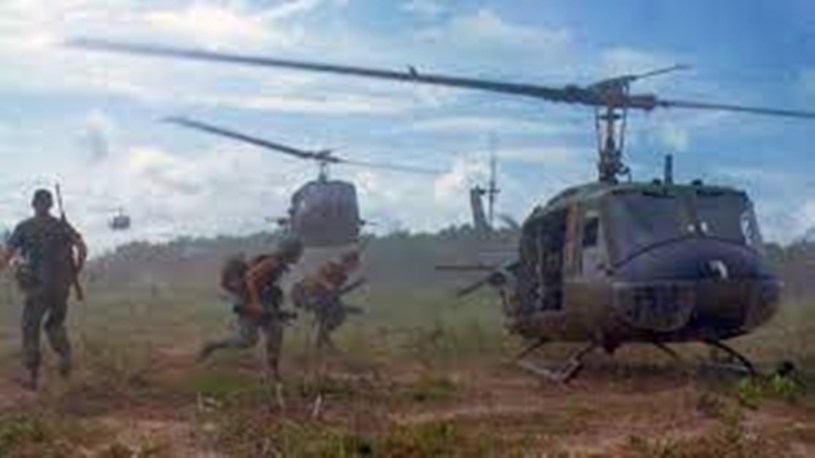
Here’s a short article about manufacturing the Huey, Chinooks, and M79 grenade launchers, which all debuted during the war.
By Jackie Edwards
During the Vietnam War, American military spending hit an all-time high of $85 billion in 1969. As the U.S. government continued to pour money into military technology and weapons development, the war became notable for the numerous technologies (like the Huey helicopter and M79 grenade launcher) making their combat debut. While the American military and their allies typically used weapons manufactured on U.S. soil, North Vietnam had to rely on weapons and equipment manufactured in the Soviet Union and China.
The Huey: the workhorse of the Vietnam War
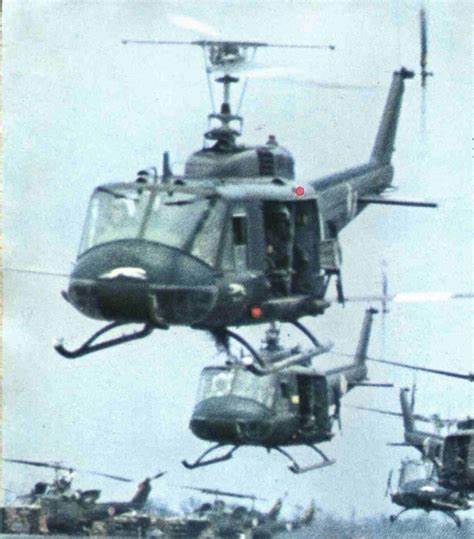
The Bell UH-1, the Huey, is the defining symbol of the U.S.’s involvement in Vietnam. Although government orders for helicopter models surged during the war, the Huey was the most in demand. In fact, helicopters took center stage in the conflict, so much so that it quickly became known as the “Helicopter War.” Helicopters were used for multiple purposes, from transporting and resupplying troops and evacuating wounded people for medical care to providing aerial fire support.
Orders for Hueys in Vietnam began to increase in the late 1950s as they were needed for medevac missions for American military advisors. However, the Army soon recognized this impressive workhorse’s deeper value for the war effort. As such, they began to put in orders for large Hueys (called “Slicks”) to transport troops, as well as attack-style Hueys that featured machine guns and missiles that could be controlled via a joystick
100+ Hueys manufactured per month
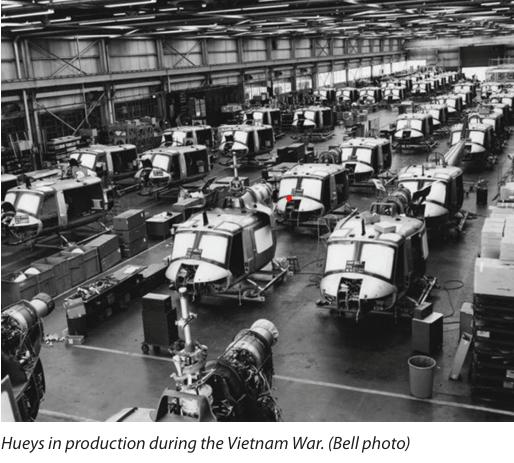
Bell started manufacturing over one hundred Hueys every month during the peak of the Vietnam War. According to the Vietnam Helicopter Pilots Association, Bell manufactured 10,005 Hueys in total from 1957 to 1975, with 7,013 Hueys used for the Vietnam War. It wasn’t long before Bell started to cast the popular nickname Huey (derived from the phonetic pronunciation of UH) on the helicopter’s anti-torque pedals. It also can’t be understated just how much of a money-maker Huey manufacturing was for Bell. In 1962, Bell had profits of $150 million ($60 million of this civil), while that figure had shot up to over $2 billion by 1967, with civil sales amounting to $385 million. Of course, anti-war campaigners were opposed to the staggering profits being made by defense contractors (as well as the general U.S. involvement in the war), and this was a huge point of contention at the time.
Boeing CH-47 Chinook
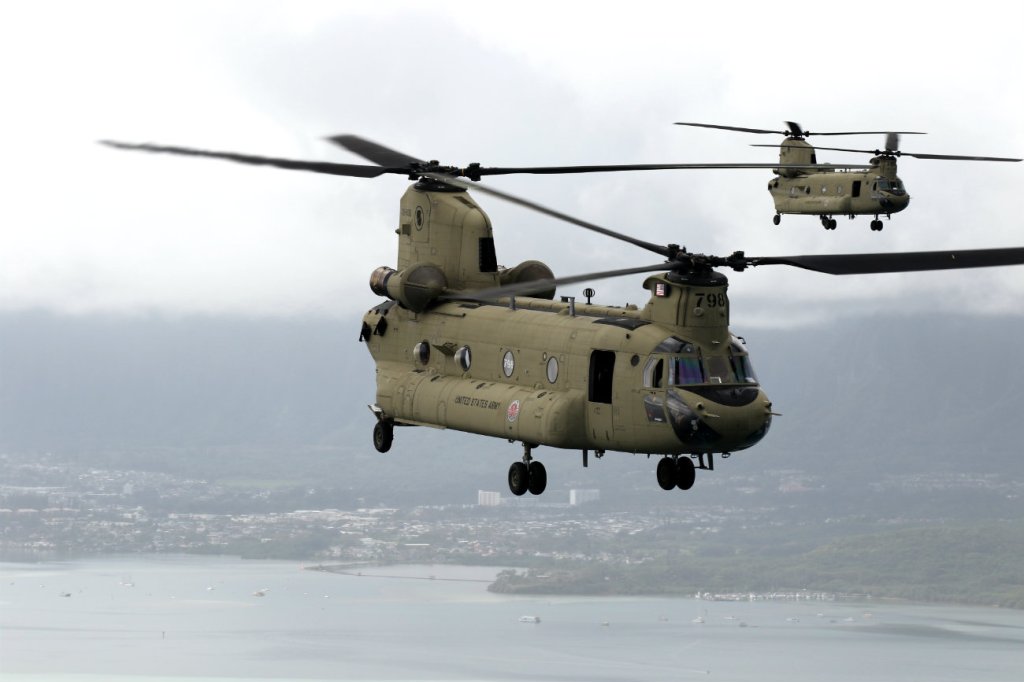
After the Huey, the Boeing CH-47 Chinook is probably the second-most iconic helicopter from the Vietnam War era. The CH stands for “cargo helicopter,” and this model was used to carry heavy loads and transport troops. The Boeing Company first started helicopter production in Delaware County in 1960. As demand for the Chinook grew, a record-high 13,000 workers were employed in manufacturing the first generation of this helicopter. Chinook manufacturing was no small feat. The largest version used in Vietnam had a weight capacity of a whopping 46,000 pounds, and a single model was capable of evacuating 147 South Vietnamese refugees. It could also comfortably fit 55 troops and transport thousands of pounds of heavy cargo and weapons.
Defense worker safety
U.S. defense plants prioritized speed and efficiency virtually 24/7 to keep up with the intense demand. Workers, therefore, often had to work double or even triple shifts per day. Although this was great for output, regular maintenance of equipment and machines was consequently put on the back burner. Older machines also found it challenging to keep up with longer hours and fast-paced work. Even worse (but not surprising), some companies also neglected worker health and safety. New workers often weren’t provided safety training or standard protections, making their jobs even more dangerous. Fortunately, safety in manufacturing and heavy industry in the U.S. has improved drastically. Advancements in technology like safety apps, drones, wearable devices, and robots are increasingly used to improve safety and prevent human error in manufacturing plants, and boost productivity and output.
Weapons manufacturing: M79 grenade launcher
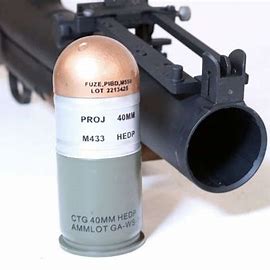
Weapons were also quickly developed and manufactured in the U.S. during the war. For example, in 1953, the Springfield Armory started designing the M79 grenade launcher, which took seven years to perfect. Over 350,000 units of this weapon (a simple, easy-to-use shotgun-like device) were then manufactured by the Kanarr Corporation, Action Manufacturing Company, Daewoo, Thompson-Ramo-Woolridge, and Exotic Metal Products.
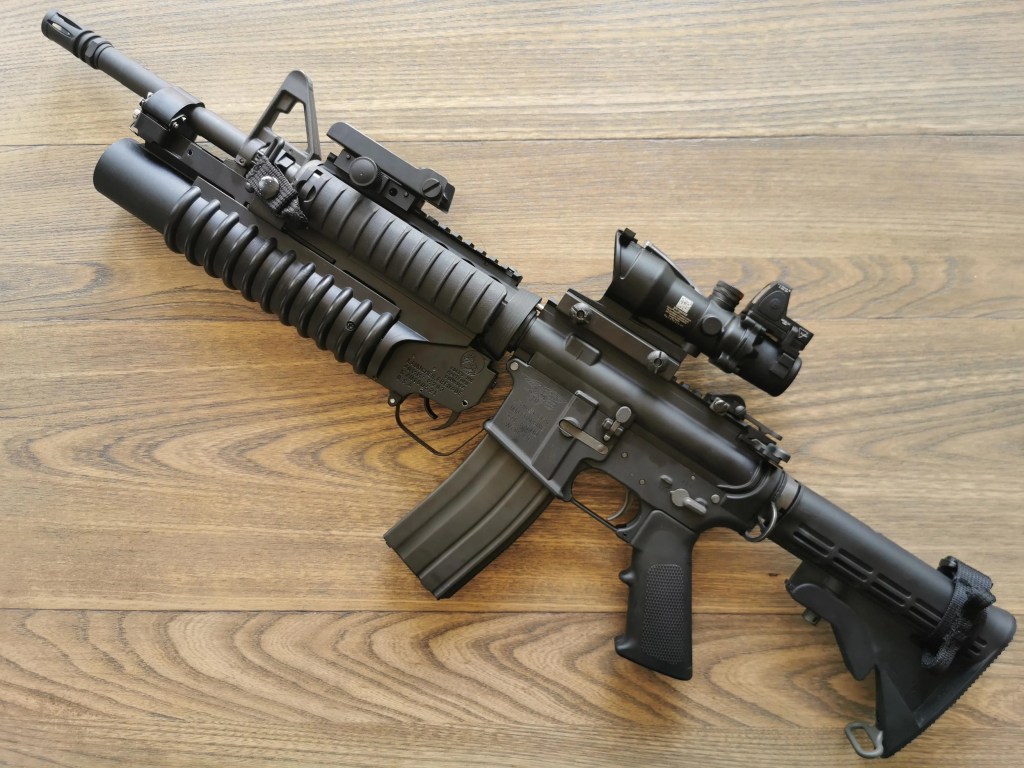
The design was refined and replaced by the M203 40mm launcher, which could attach to assault rifles like the M-16.
Vietnam’s weapons: manufactured by the Soviet Union and China
While the American army, along with their allies, mostly opted for weapons manufactured in the U.S., Vietnam relied on weapons, equipment, and uniforms made in China and the Soviet Union. At the time, North Vietnam’s infrastructure was underdeveloped, the population was poor and largely illiterate, and enterprises were scarce.
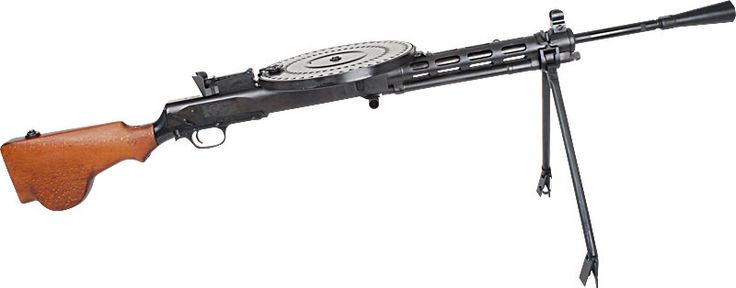
For example, the DP 7.62mm light machine gun was developed by and manufactured in the Soviet Union (as well as in China) and imported into North Vietnam. The “peasant’s rifle” — also known as the AK-47 — was made and imported by the same countries.
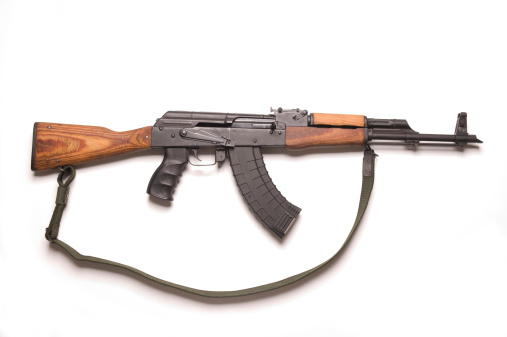
The AK-47 could fire 7.62mm bullets at a rate of 600 rounds per minute and at a range of 435 yards. It was also capable of either automatic or semi-automatic fire.
Although Vietnam had a solid industrial policy (called the First Five-Year Plan 1961-65) designed to grow heavy industry, this goal was obviously impeded once the U.S. began bonding with the country in 1964. As a result of the 1965-72 air strikes, all of the north’s six industrial cities and most of the towns were destroyed. All roads, bridges, railway lines, power stations, and ports suffered considerable damage, which delayed the country’s plans for large-scale construction and industry growth.
Helicopter and weapons manufacturing went into overdrive during the Vietnam War. From the Huey to the M79 grenade launcher, the conflict soon became notable for the unprecedented and rapid technological innovation achieved.
To see a more detailed look at all the weapons used during the Vietnam War, please check out my earlier article on this website: https://cherrieswriter.com/2022/04/17/weapons-of-the-vietnam-war/
Jackie Edwards contributed an earlier article about Gun Trucks in the war. You can read it here: https://cherrieswriter.com/2024/04/06/creative-solutions-to-overcome-the-drawbacks-of-gun-trucks-in-vietnam/
*****
Thank you for taking the time to read this. Should you have a question or comment about this article, then scroll down to the comment section below to leave your response.
If you want to learn more about the Vietnam War and its Warriors, then subscribe to this blog and get notified by email or your feed reader every time a new story, picture, video and changes occur on this website – the button is located at the top right of this page.
I’ve also created a poll to help identify my website audience – before leaving, can you please click HERE and choose the one item that best describes you. Thank you in advance!

 CherriesWriter - Vietnam War website
Nice article, I heard that Lady Bird J was also a major shareholder of Bell Helicopter, Do you know this to be true ?
LikeLike
I also heard Lady B was a stock holder in the construction company in VN USArchitects and Engineers!
that maybe where Pelosi learned her methods as well?
LikeLike
a RPG launcher they had captured.
The North Vietnamese or VC made it. It was poorly made. It had very rough, crudely cast metal parts, and it was held together by strips of bamboo. The launchers supplied by the Soviet Union were beautiful by comparison.
Don Wolfe
LikeLike
Excellent article. As a child-turned teenager, I lived about 5 miles from the Bell Helicopter plant in Hurst, Texas. I can recall seeing what looked like horizon to horizon helicopters at low level one evening from my backyard. Don’t forget the OH-58 Kiowa scouts and AH-1 Cobra attack helos, also designed and built by Bell. The USMC was still flying Cobras until 2020. The heavy lift CH-54 Sikorsky “Flying Cranes” helicopters were still flying into the 80s.
By the way, most of the Kalashnikov AK-47s were made in Bulgaria and a large number made in Czechoslovakia during the war. I visited their plants in the early 2000s after the fall of the Berlin Wall as a military consultant.
LikeLike
SOUNDS LIKE A LOT OF MONEY WAS MADE BY MANY MANUFACTURES AND ISN’T THAT WHAT THE WAR WAS REALLY ABOUT. BIG MONEY FOR MANUFACTURES AND FOR THOSE IN CONGRESS WHO SOLD US OUT. LIKE THE TONKIN GOLF INCIDENT HAS BEEN PROVEN BY NSA THERE WAS NO GUNBOAT ATTACK. AND LBJ WAS INFORMED BY MCNAMARA THERE WAS NO WAY WE COULD WIN THE CONFLICT. NOT WAR, AS CONGRESS NEVER DECLARED US IN A WAR. EISENHOWER BEGAN SENDING ADVISORS IN AND WHEN KENNEDY GOT INTO OFFICE HE BAGAN TO PULL THEM OUT WITH RESULT, HE IS ASSASSINATED, AND THE CONFLICT GOES ON WITH NO WRITTEN PLAN HOW TO WIN THE CONFLICT. HOW DOES THAT HELP YOUR PTSD? IT DOES NOT HELP MINE. THE WALL, THOUSANDS DIED FOR WHAT?
LikeLike
Lady Bird Johnson owned Sea Land Shipping. Everything sent to Vietnam was shipped by Sea Land. The President and his wife became extremely wealthy through Sea Land.
LikeLike
Buy yet with the US industrial complex spending billions upon billions for more and new weapons of destruction…it still wasn’t enough to win the war.
LikeLike
the war was over in 1953..ho chi minh asked truman to help him get rid of the French after WW2, 1953 is when they left. therre was no reason for us to stay. russia and china did not want us on the asian mainland or at a deep water port for our subs and aircraft carriers….Daniel ellsberg’s book Secrets. He was a marine at the Pentagon he saw the cables of the north using subs to attack our ships in the gulf of Tonkin. No ships or bodies were ever sunk and no debris ever found, the sounds he said were from a faulty sonar.
Ho Chi Minh was a student in boston and NY, washed dishes so he could finish his education. loved the constitution. and now we have another weak president and he is dragging us into war.
LikeLike
True Story also France would not join NATO unless we helped them get Vietnam back. Remember it was called French Indochina comprised of 4 countries. Vietnam, Thailand, Laos, Cambodia
LikeLike