

Patrolling through the Vietnam jungle in a tank wasn’t as safe as one might think. For instance, the enemy can hear you across a great distance and has time to prepare a welcoming committee upon your arrival. Other things that we might not have considered are discussed in this new post. Check it out…
By RJ Holland taken from Quora
Jungle combat was extremely dangerous. Many times you couldn’t see past the front of your tank. Anything could be out there waiting and many times it was. Our tanks, the M48A3 Patton tank could take a lot of crap from RPG rounds, stick grenades, and small arms fire. What gave our tanks a hard time sometimes were tank traps. Large, square holes dug in the ground and covered. Very hard to see, very hard to get out of. The L or U shaped ambushes were not a welcome thing either. But with the help of other tanks ‘scratching your back’ with small arms fire to kill the VC soldiers that had climbed onto the tank and after some desperate fighting, we usually got out of those ambushes. The grunts out in the open had it much worse. The VC usually chooses when and where to fight you. The slimy, sticky Vietnam muck, especially during the monsoon season was hell to get around in.
Anything can happen in the jungle. When you are driving your tank and crunching trees, branches, and anything else that gets in your way, it’s pretty stressful because you cannot see six feet in front of you. You are ordered to ‘button up.’ That’s really two orders for it means to close your hatch and lock the latch and that has been drummed unto you since Advanced at Fort Meade, for Blackhorse troopers anyway.
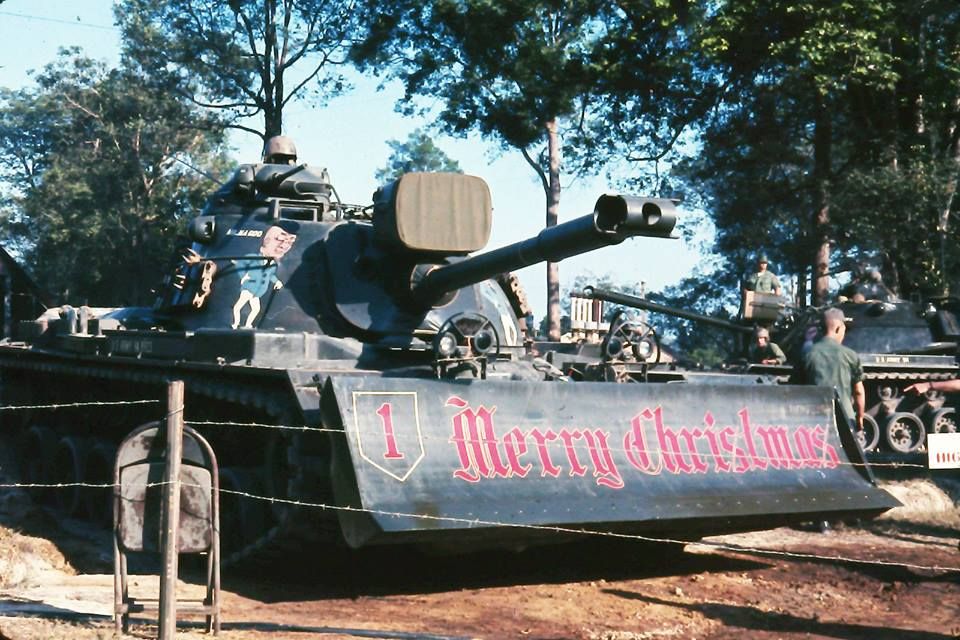
If we were lucky, we would have the engineers with us with their big dozers and their Rome plows. But they were busy most of the time so our A3s had blades that could be attached to the front of our tanks too plow a path through the jungle for the infantry.
There were lots of dangers in the jungle, from hidden punji sticks to hidden snakes. Yes, this is exactly what it sounds like. Viet Cong guerrillas would often carry Bamboo Pit Vipers in their packs to (hopefully) kill anyone who searched through them.
The cartridge trap. This trap was an awful one because it was very difficult to detect. A cartridge – a round of ammunition – would be set into a piece of bamboo and lowered into a shallow hole in the ground. At the bottom of the bamboo was a board and a nail. The regular weight of someone walking on the cartridge would drive the nail into the primer, turning the nail into a firing pin and firing the bullet upward through the unsuspecting victim’s foot.
Another tripwire trap was the Mace. Once the wire was triggered, a 24-inch metal or wooden ball with spikes welded onto it, weighing 40 pounds or more, would swing down from a tree, sending anyone in its path straight to Valhalla.
A tiger trap was similar to the mace, in that a tripwire would undo the catch on a rope. Only instead of a swinging ball, the death from above took the form of a man-sized plank weighted with bricks and full of barbed metal spikes quickly falling to earth on someone’s forehead.
At any time, the enemy could jump out at you from spider holes, do some damage and disappear in seconds.
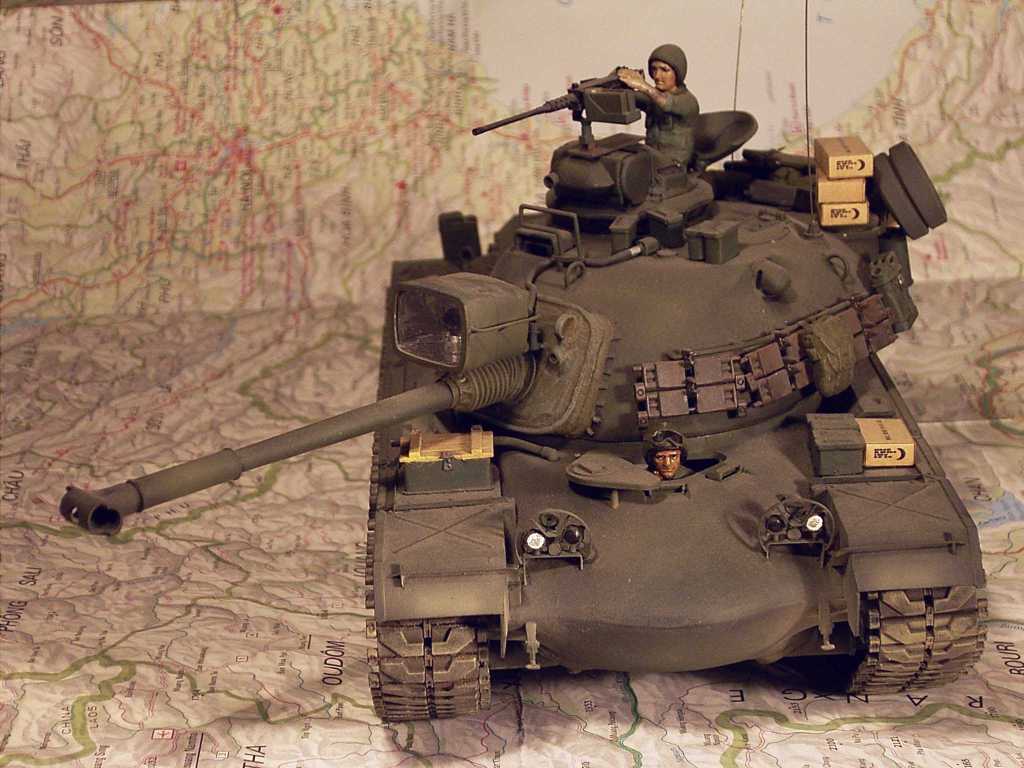
The driver actually had the most dangerous position in the tank. The driver was surrounded with extra ammo rounds for the tank’s cannon. The hatch was a little more difficult to open than the other hatches on the turret and had to be raised and swung to the right. If something in combat jammed the hatch or was lying near it so it couldn’t be opened all the way, the driver was pinned inside and burned to death then blown to hell from the exploding tank rounds inside. One ace up his sleeve was an escape hatch on the floor which was usually covered with flak vests to dampen mine explosions. If he was quick enough to fling them out of the way, grab his Car 15, and open that hatch, with a little luck he could live to fight another day.
We were issued the old M3 grease gun but later scrounged Car 15s, a much better weapon that was shorter than the M16. Took a 29-round mag, standard for US weapons. I also wore my shoulder holster for my 1911 .45 over my flack vest. A little cumbersome but if I had to get out in a hurry, I’d have my vest and my beautiful Colt. Besides, Mama made me promise to be careful and take care of myself.
Our tanks had the armor to withstand RPG hits, especially when we added Pierced Steel planks and spare track blocks on the outside of the tank. The outside bustle rack behind the turret was loaded with spare Mg ammo, c ration boxes and our duffel bags to further protect us from RPG rounds. When the round hit any of these things they would take the blast of the round and not the actual tank. For the 90 cannon, we mostly used canister and HE in Vietnam. Also Beehive, a shell packed with steel flechettes when available.
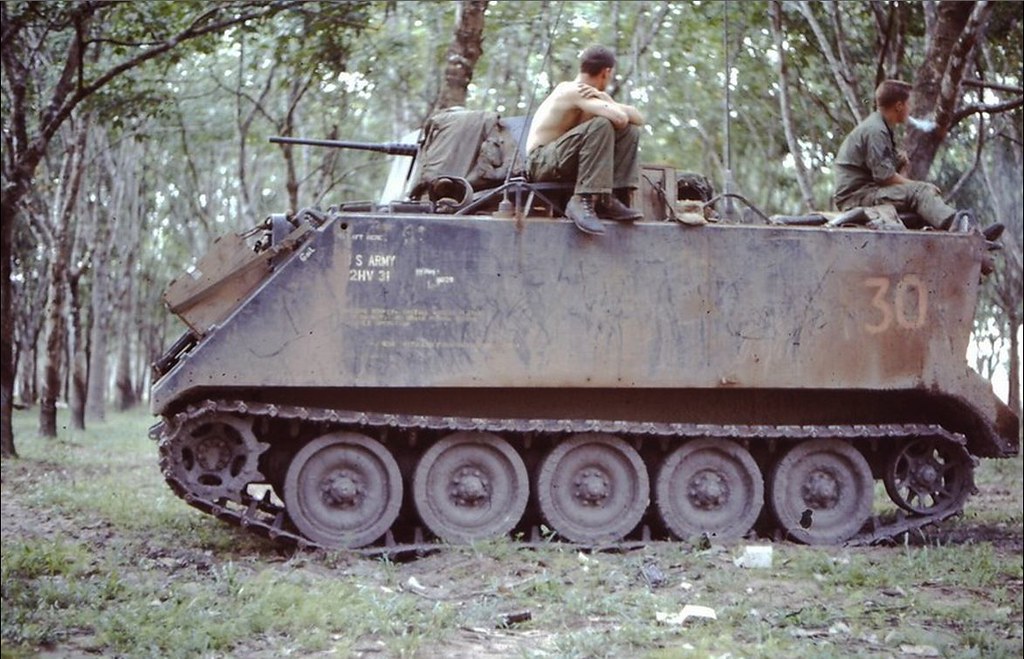
However, the M113 ACAVS could not survive RPGs as well as our tanks. RPGs usually tore through their thin armor and the result was not pretty. The crew was usually burned alive. I lost one of my best friends that way. He was driving an ACAV close to us and I saw it hit and explode with a tremendous flash. Didn’t have a chance. I could do nothing but keep driving my A3. The despair and loss overwhelmed me but I had to keep working. I can still see it today. Mine clearing, convoy duty, thunder runs and troop support ops were not without their own dangerous hazards.
There are other segments of being a tanker that are dangerous and have little to do with combat such as smashing your teeth, nose or breaking a jaw against the edge of the hatch, crushed hands and fingers and a simple thing like traversing a turret can end up with a mangled arm or leg. And oh yeah, back spasms. Tankers should be built like The Hulk, smaller versions though. A tanker’s life is mostly maintenance, maintenance, maintenance.
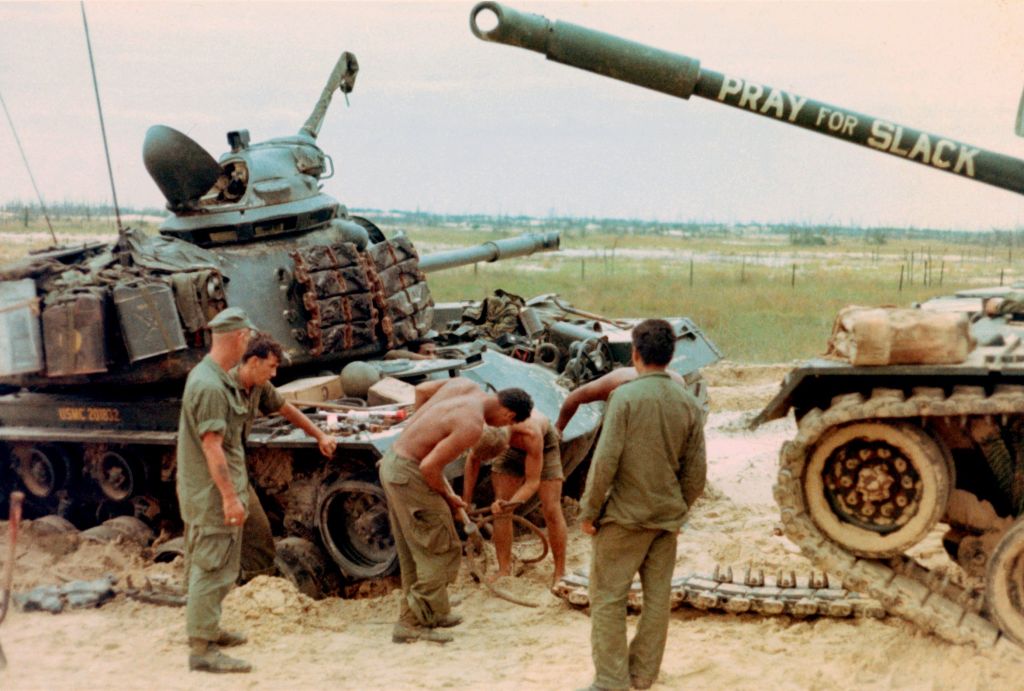
One hour of tank operation is equal to about three hours of maintenance. At least it used to be in 1968 and I’m sure it hasn’t changed all that much. I’m not even counting loading ammo and supplies. You are always working with very heavy solid steel items; lifting, handling, fixing, pushing, and pulling. A tanker’s life is backbreaking work and living in a greasy, loud, smokey, scorching hot kidney crunching world is not easy, but someone has to do it.
The jungle? It wasn’t only the human enemy you had to worry about. The incessant mosquitoes, hordes of ants, scorpions, 15-inch centipedes, huge snakes that could easily swallow a man, and the two-step snake. Let him bite you then after taking two steps, you were dead, or so they said. And let’s not forget the ‘wait a minute vine’, that lovely thick vine with the big, sticky barbs that have pulled tankmen out of their hatches. That’s what you have to live through in the jungles of Vietnam during the war.
However, your fellow crewmen are living it with you, and your brothers, and the humor and closeness get you through it. Now, next time you pass an armor crewman, maybe you’ll look at him a little differently and more respectfully knowing the dangers he also goes through when he’s not in combat.
*****
Thank you for taking the time to read this. Should you have a question or comment about this article, then scroll down to the comment section below to leave your response.
If you want to learn more about the Vietnam War and its Warriors, then subscribe to this blog and get notified by email or your feed reader every time a new story, picture, video and changes occur on this website – the button is located at the top right of this page.
I’ve also created a poll to help identify my website audience – before leaving, can you please click HERE and choose the one item that best describes you. Thank you in advance!

 CherriesWriter - Vietnam War website
I’m married 56 yrs to a USMC Vietnam who served in Tanks.
Thank you for writing this article!
It’s a wonder our tankers suffer from PTSD !
LikeLike
very informative I though a tank might be a safer bet then in ww2 maybe not
LikeLike
My second Nam novel will be finished soon, “The “Kleins” . Paul Scipione
LikeLike
I was a Tank driver in VN 1966–1967 you were pretty much right on.
57 recoilless could also pierce the armor of turret. I hit two mines.
and had one 57 recoilless, pierce the turret. still loved my tank.
LikeLike
I was an Engineer with the Rome Plows and experienced much of what others have written .. to even have a video of a wired artillery round next to me when my 3/4 ton got a flat tire outside of Go Da Ha! Tanks and tank retrievers that hit buried aviation bombs were usually totaled.
My friend, Donn Starry, wrote a very good article in Armor Magazine, in 1971, reprinted Set-Oct 2008, pp.59-64m “A Report on the 11th Armored Cavalry in Southeast Asia 1969-1970”
LikeLike
I enjoy reading about the 11th ACR in Nam. My first duty station was Armor crewman with 7th Cav 2nd ID and I’ll always remember my time being a Cavalryman. Even though, after about a year in I had enough and switched MOS to Intelligence in 1964. My tour of duty in Nam was 1965 with 1st ID HQ G2 at Di An. But it could have been me in one of those M48A3’s if …. . God moves in mysterious ways.
LikeLike
l’ve run into snakes that are big enough to eat you. Once when crossing a canal I reached up to grab brush an hoist myself up the slippery mud bank when a snakes head half as big as mine popped out of the grass inches in front of my face. I froze neither expecting nor believing what was in my face. We stared back and forth for a while until my mind started working and I slid back into the water. The snake looked amused. Later when it slid down the bank, it was huge, possibly close to 30 feet in length. Never bothered me just kept to its own business and swam down the canal; head raised like a pariscope watching me as it swam away.
LikeLike
Good info……. We rode atop the APCs n fell into one of those holes while searching the Iron Triangle AO. We went airborne and ended on the ground. We also found a wired artillery round in the grass in front of the APC. It could have been a real mess.
LikeLike
As a USAF F-4 Phantom crewmember, I enjoyed my tour in 71-72. We slept in air-conditioned 2-man rooms, with shared bathroom. Each squadron had a bar in the squadron building & it was well-stocked. We got our asses shot up now & then, & many died or were captured, becoming POW’s. All this is to say you Army & Marine guys had steel balls & lived a much tougher existence than us AF guys did in Vietnam. The AF guys in Thailand really had it even better. I’m proud to have served & proud to read stories from the ground guys. I tip my hat to you!!
David Bubba Craighead 366TFW 1971-72
DaNang/Takhli
LikeLike
Another insightful post. Such a horrible thing to have to go through.
LikeLike
Enjoyed your article. I was a grunt in Vietnam. We envied you tankers, but then again I never saw one get torn up in a fire fight. Respect for what you guys did. But at least you had armor. As Audie Murphy famously said “How much protection do you think this GI shirt gives?”
LikeLike