

I recently received an email from my friend, and Nam Brother, Robert Robeson, who informed me that he recently completed the first draft of a poetry book titled, “The Sights, Sounds, and Smell of War.” He sent me two poems: one is humorous and the other serious which most combat vets can identify with. Have a look!
Retired LTC Robeson was a Dust-Off, medevac pilot with the 236th Med. Det. (Hel. Amb.) in Da Nang (1969-1970) and operations officer before being promoted to commander.
I have seen no combat poetry published on your website but am offering these two should you find them interesting…though a bit out of the normal spectrum of information you usually present.
Admin: I also added two poems found on the FB Group page Que Son Valley Contractors – no author indicated. Perhaps posting poetry will become a new trend. Enjoy!
HOME IS WHERE THE HEART IS
by Robert B. Robes
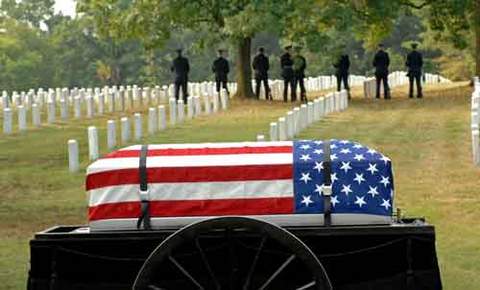
Nothing changed my perspective of our nation’s flag than
leaving home for a war zone and the possibility of
returning with one draped over my metal coffin.
In combat, I gained a unique understanding of what life, freedom
and the preciousness of home and loved ones really mean.
The hardships of war involve witnessing the carnage and cruelty
of battle, while flirting daily with that demon of death.
Surrounded by the insanity of warfare, I only wanted to
return safe and secure to the sanity of home.
Confrontations in combat have always been profane, ugly, and
terrifying because war’s a bloody enterprise where
life-threatening events may occur at any moment.
When it felt as though the world had lost its way, I intimately
realized that my family and home were loved with similar
passion as Satan loves sin, death and destruction.
Even though I was transported halfway around the world, my thoughts
and remembrances of home remained forever etched in my heart.
Returning safely from combat created an unbelievable catharsis for this
grateful soldier. I was fortunate to elude the Grim Reaper. Now
“home” represented my victory over fear, fatigue and fate.
Que Son Valley Contractors (1 of 2)
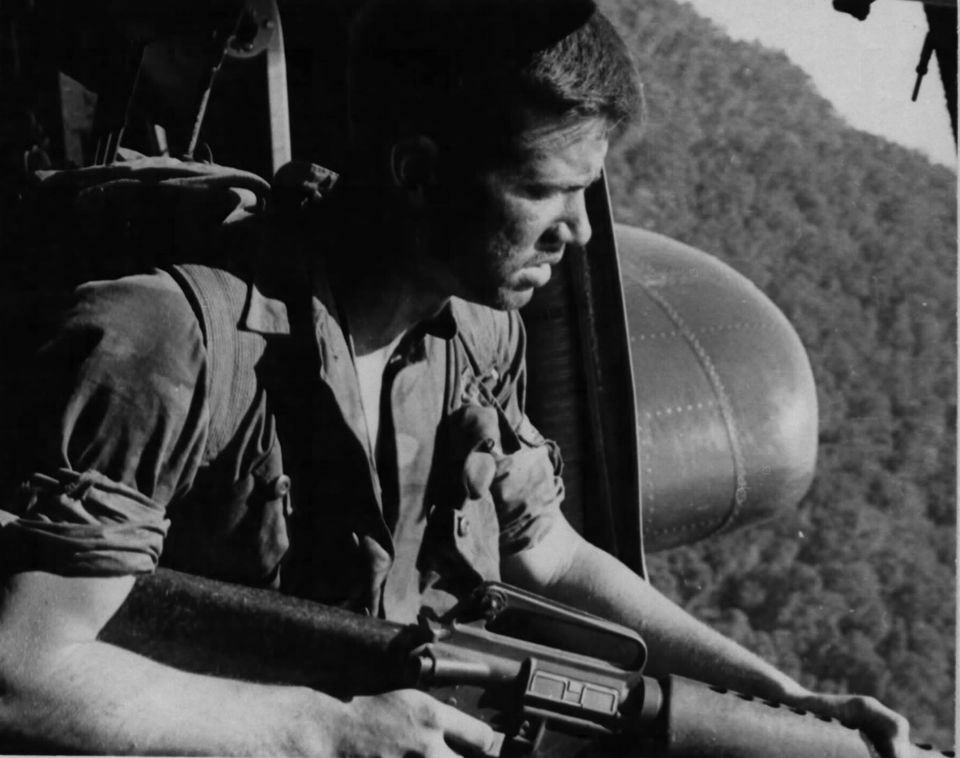
He would have been 25 in ’75
might have had a house , kids , a wife
a life
could have been Commander of the VFW
never known a moments sorrow
a guy his friends adored
could have gone hunting , fishing too
taken a trip to the Bronx Zoo
got his Masters Degree
been in debt up to his knees
but …
none of that was to be.
Que Son Valley Contractors (2 of2)
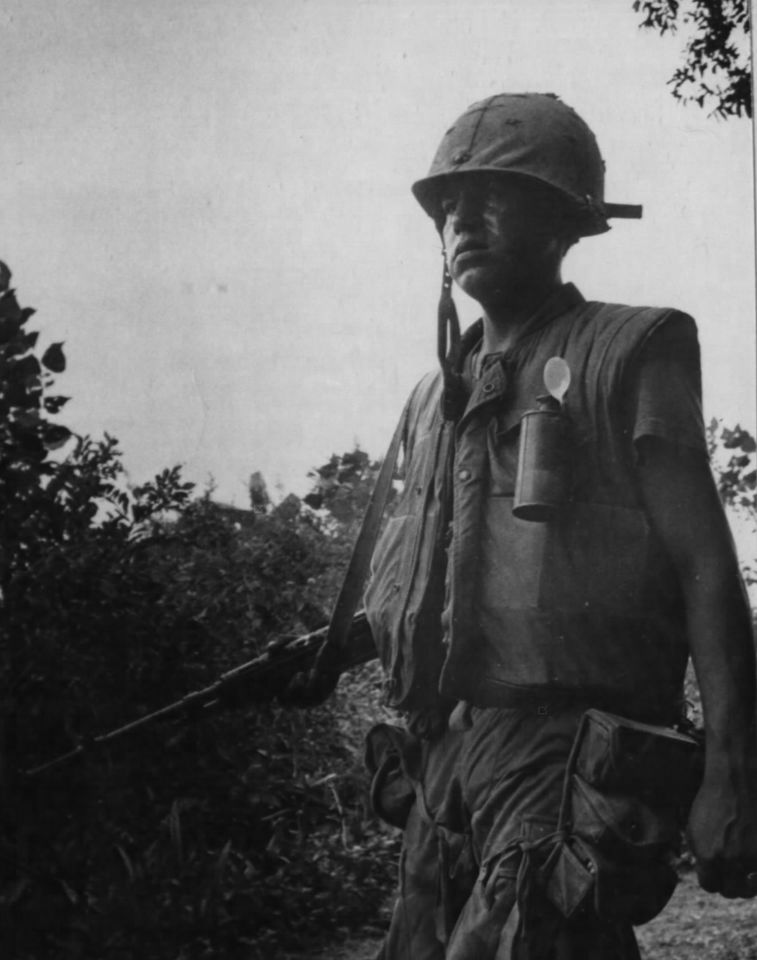
He was raised under the Carolina sun
Called every woman ” Hon “
Then along came that damn Vietnam war
Well , he up and joined the Corps
like his dad did 25 years before
Went off to Paris Island , Schools Company , Staging
A Marine in the making
Thirteen months later home he came
Everyone said .. He’s changed
though he kinda looks the same
then they saw the look in his eyes
knew the guy had died
How his Momma cried
His Momma cried his Dad swore
their son was no more
killed in that damned Vietnam war
and to this day under the Carolina sun
he still fights a war he’s never won .
PAPA-SAN AND THE MONDAY BURNS
by Robert B. Robeson
Papa-san, the name we all called him, was skinny as a noodle and
seldom smiled. This Vietnamese male version of a hootch maid in
our unit had many talents. From Tuesday through Friday, he’d help
repair military vehicles in our motor pool under the direction and
watchful eye of a maintenance warrant officer.
But Mondays were different.

Early in the morning he’d collect our unit’s officer and enlisted
latrine waste. He manhandled the 55-gallon drums that had
been cut in half for use in disposing of this odoriferous accumulation.
These metal drums were placed beneath both latrine’s four-seater
holes. He’d move them, one after the other, to a large open area where
fuel oil would be added to this potent mix. Using a long-handled
wooden paddle, he’d stir the nauseating contents to ensure thorough
blending before throwing lit matches into each drum. Clouds of black
smoke would billow out and be lifted aloft by consistent sea breeze
along Da Nang Harbor to the north. With other units on our
compound performing this exercise at the same time, it appeared
they were attempting to communicate through smoke signals.
I’ve often wondered how the Army would have denoted his official
job description duties. Would it have been “Vietnamese national
latrine waste burn specialist?” Maybe “Crap connoisseur
extraordinaire?” Or even “Bowel movement manager, first class?”
It might have taken an entire personnel division, at the Pentagon,
to solve that administrative dilemma.
Papa-san had a large family to feed and this job deferred him from
being part of his country’s cannon fodder. The pay was good. Yet
these mandatory Monday burns must have felt like performing his
own vasectomy surgery. I wonder if he ever told his wife about that
part of his job duties. Without access to nose plugs or effective
deodorizers, perhaps that’s one of the reasons he seldom smiled.
<><><>
Retired LTC Robert Robeson has submitted four previous articles that I published on this website over the years. They are all great stories and are worth a read. I included the titles and links below:
Admin: If you have a military poem that you’d like to include as part of this article, please post it in the comment section below.
*****
Thank you for taking the time to read this. Should you have a question or comment about this article, then scroll down to the comment section below to leave your response.
If you want to learn more about the Vietnam War and its Warriors, then subscribe to this blog and get notified by email or your feed reader every time a new story, picture, video and changes occur on this website – the button is located at the top right of this page.
I’ve also created a poll to help identify my website audience – before leaving, can you please click HERE and choose the one item that best describes you. Thank you in advance!

 CherriesWriter - Vietnam War website
love all of these brothers
LikeLiked by 1 person
Never saw who did the burning but at Camp DaNang, ’66, the smell permeated the tents.
LikeLiked by 1 person
How does one offer a poem for consideration?
Street Without Joy
Verdant fields like manicured gardens,
Laced delicately with blue and
Starkly contrasted against barren
Dunes and rust hills, flash by
As cool monsoon rains pepper
The windows of the Huey
That carries me high above
The Street Without Joy.
Far below me unimposing.
Ancestral homes are carelessly
Sprinkled across a patchwork of
Rice paddies and stately hedgerows.
Majestic churches lift their
Spires in silent prayer as
Children tend water buffalo on
The Street Without Joy.
Peace and tranquility seem to
Pervade this pastoral scene,
The pain and ravages of war
Long past and almost forgotten.
But, alas, it’s only a sad
And transitory illusion, for
I know that Charlie still walks
The Street Without Joy.
Herman W. Hughes, LT, USN
Republic of Vietnam
November 1968
The stretch of Highway 1 from Dong Ha to Hue came to be called
“The Street Without Joy” during the French-Indochina War. I was there in 1968 and wrote this poem and called it Street Without Joy
LikeLiked by 1 person
You just did.
LikeLike
Thank you.
Captain Herman W. Hughes, PhD US Navy Ret,
hwhughes@aol.com
LikeLiked by 1 person
I just did:
.
(APOLOGIES TO HENRY WADSWORTH LONGFELLOW)
The shades of night were falling fast
As through an Old Man’s mem’ry passed
A youth, who penned, in marker, black,
His helmet with the Latin crack:
“Distentio”!
His brow indifferent beneath,
His bayonet still in its sheath.
He’d had some college, so he sung
In accents of that unknown tongue,
“Distentio!”
Downhill the shrapnel split the air.
Artillery? What did he care?
Above, the spectral gunships roared,
But from his lips escaped a bored,
“Distentio!”
Intel had cut the troops no slack.
“Beware the human wave attack!”
Thus were the peasants poised to kill.
A voice replied, far up the hill,
“Distentio!”
“We’re calling jets,” the sargeant said;
“So stack those sandbags overhead,
And dig in deep; prepare to fight!”
Now hear a voice o’ercome with fright:
“Distentio!”
“Dear John,” the girlfriend’s letter said,
“For all I know, you might be dead.”
A tear stood in his bright blue eye,
He’d answered her but with a sigh:
“Distentio!”
. . . .
At break of day, from heavenward
As MEDEVAC came chopping toward
The ruins of that landing zone
A voice cried, though it were a groan:
“Distentio!”
A soldier, by cadaver hound,
Half-buried in the clay was found,
Still perched upon his quiet head
That helmet scrawled with black and red:
“Distentio!”
This morning, under cold gray skies,
Alone, an old man tries to rise,
He hears that distant cry from far,
As from the clouds – the Muse of War:
“Distentio!”
* *
SP4 William Paul Gruendler
C Co 1-20 11Bde AMERICAL
1971
LikeLiked by 1 person
love the “ spiritual gunship” line
LikeLike
update
LikeLiked by 1 person
Lots of poetry on LZSALLY.COM ________________________________
LikeLiked by 1 person
I am the Author of
Toy Sampans!
A story of my own
experience during
1966 – 67 serving
with the 173d LRRP
Teams and A Co. First
Battalion!
I did a poem describing
an ambush from a Long
Range Patrol perspective.
The recorded version
below was done long
before I wrote my book.
Every Body’s Drum.mp3
If you are interested in a
copy please tell me how
I can send it out to you?
RayJ Hill
Sent from my iPhone
LikeLiked by 1 person